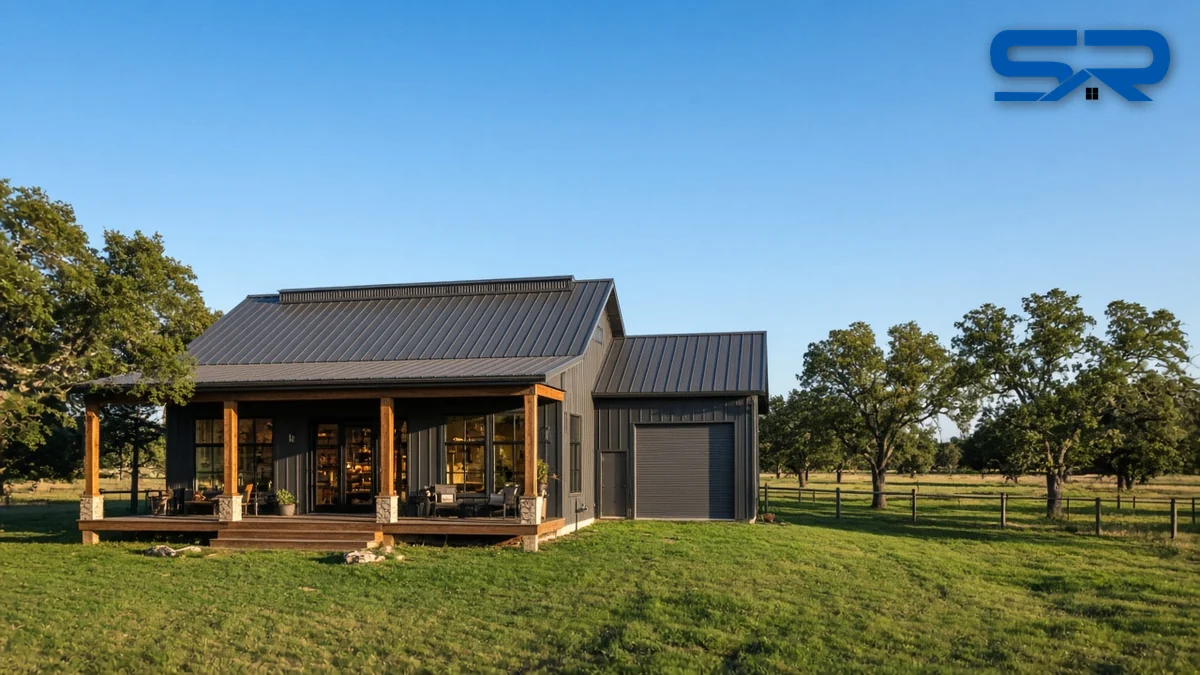
A lot of the barndominiums going up around Chico are real homes now, with kitchens, bathrooms, bedrooms and a shop bay on the end. That changes what the metal roof has to do. A hay barn can get away with bare steel overhead. A house can’t. The number one problem I get called about on living-space barndos isn’t a leak at all. It’s condensation.
I’m Blake Snow. I’ve been roofing for 30 years, I’m the third generation in a family roofing business that goes back 75 years, and our crews have completed over $80 million in roofing projects. Our Bridgeport office is right down the road from Chico, so we see a lot of these buildings. Here’s how I explain condensation to owners, and how we plan for it.
What condensation actually is
Air holds moisture. Warm air holds more of it than cold air. When warm, damp air touches a surface that’s colder than its dew point, the moisture comes out as water. You see it on a cold glass of tea in August.
Steel roof panels lose heat fast on a clear night. By early morning the underside of the metal can be a lot colder than the air inside the building. If that inside air is warm and damp, it hits the steel and turns to water. Then it drips.
In a barndo, there’s plenty of moisture to go around: showers, cooking, laundry, people breathing, a wet truck pulled into the shop, a pressure washer, or a mini-split working hard. All of that air wants to rise toward the roof.
Why it matters more when people live there
On a shop, a little sweating under the panels is a nuisance. On a home, it can mean:
- Water spots and stains on ceilings and walls that look like a roof leak.
- Wet insulation that stops insulating and starts holding water.
- Mold and musty smells in a space where your family sleeps.
- Rust from the inside out on panels, fasteners and purlins over the years.
Owners often call it a leak, and the first thing a lot of people do is caulk screws on the outside. That won’t fix condensation, because the water is coming from inside the building.
The fix: keep warm, damp air off cold steel
Every good condensation plan does the same thing. It keeps the warm, moist inside air from ever reaching the cold underside of the metal. There are a few ways to get there, and the right one depends on the building, how it’s framed and how it will be finished inside.
- A continuous vapor barrier or insulation layer under the panels. It has to be continuous. Gaps, torn facing and open seams let damp air sneak up to the steel, and that’s where the drips start.
- Sealed edges and penetrations. Eaves, rakes, ridge, plumbing vents and any spot where pipes or wires go up through the ceiling all need attention.
- Ventilation. A ridge vent with intake at the eaves, or another venting setup that fits the building, helps move moist air out instead of letting it sit under the roof.
- Controlling moisture inside. Bath fans and a kitchen hood that actually vent outside make a real difference.
We work with your builder or insulation contractor on the parts that aren’t roofing, so the roof and what’s under it are planned together.
The shop side is different from the living side
Most barndos around Chico, Paradise and Bowie are part home, part shop. Those two spaces don’t behave the same. The living side is heated, cooled and full of everyday moisture. The shop side might be open half the day with the roll-up door up, a truck dripping on the slab and no air conditioning.
That’s why I like to treat them as two zones. A wall or ceiling that separates them, with the vapor control carried through, keeps damp shop air from drifting into the house side and up under the roof.
Standing seam or R-panel on a barndo
The panel itself doesn’t stop condensation. What’s under it does. Both panel types need the same moisture plan.
On the living side, a lot of owners choose standing seam, with its hidden fasteners and clean lines, especially when the barndo is the main house. Over the shop, R-panel or PBR is a strong, practical choice. Our standard is 26-gauge steel, with 24-gauge available when you want a heavier panel. We run our own roll formers on site, so long runs can go ridge to eave in one piece, with fewer laps where water can get in from outside.
Our barndominium, shop and ag building page covers the rest of how we roof these buildings.
Plan it before the roof goes on
The cheapest time to get condensation right is while the building is open. Once the drywall or ceiling is up, getting to the underside of the panels means tearing things out. If you’re planning a barndo, call us early, before the panels are ordered, so the vapor barrier, insulation and ventilation are part of the plan from day one.
Already built and already dripping?
We can still help. We’ll look at where the moisture is coming from, whether the insulation is torn, gapped or wet, how the roof is vented, and whether you also have true leaks at screws, seams or flashing. Sometimes it’s both. Our metal roof repair page explains how we track leaks down, and every inspection comes with a free digital photo report so you see what we see. No job is too small.
Chico and nearby towns
We serve Chico from our Bridgeport office and also cover Bridgeport, Decatur, Paradise, Bowie and the rest of Wise County and beyond. We work across the DFW Metroplex and towns within about 65 miles of Bridgeport.
Let’s look at your barndo
Whether you’re building a new barndominium or living under a roof that rains on the inside, we’re glad to come take a look. Our residential workmanship warranty runs from 10 years up to lifetime, depending on the job. We’re A+ rated on the BBB, and our Google ratings are 5.0 at all three offices: 86 reviews in Bridgeport, 13 in Decatur and 3 in Rhome.
Call (817) 733-9228 or request an estimate, and I’ll give you a straight answer about what your building needs.