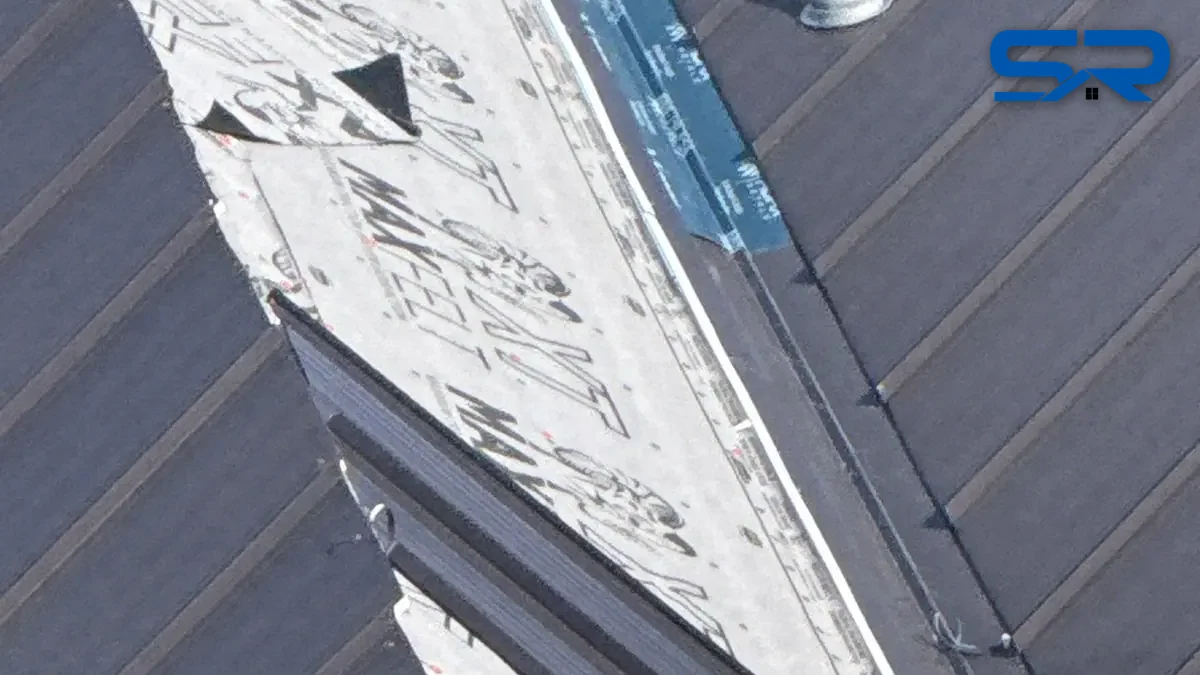
Drive around Graham and you see a lot of big roofs: ranch houses with long, low slopes, oilfield shops, hay barns, equipment sheds and commercial buildings along the highways. On roofs that size, one detail matters more than most people realize. It’s whether each metal panel runs in one piece from the ridge to the eave, or gets spliced together partway down.
I’m Blake Snow. I’ve been roofing for 30 years, I’m the third generation in a family roofing business that goes back 75 years, and our crews have completed over $80 million in roofing projects. Graham is a straight shot out US 380 from our Bridgeport office, and long runs are something I talk about on almost every big metal roof we bid. Here’s why.
What a one-piece run is
A metal roof is made of long strips of steel laid side by side. On a one-piece roof, every one of those strips goes from the very top of the roof to the very bottom with no break in it.
When a panel isn’t long enough, the installer has to overlap two panels to cover the slope. That overlap is called an end lap. It sits right in the path of the water running off the roof.
Why end laps cause trouble
Water always runs downhill. On a one-piece panel, it has nowhere to go but straight off the eave. At an end lap, it has to cross a seam on the way down. That seam is only as good as the sealant and fasteners holding it.
Over the years, a few things work against that seam:
- Heat and cold. North Texas roofs swing from blazing afternoons to cool nights. Steel moves with that, and the lap gets worked back and forth.
- Wind-driven rain. Hard storms can push water uphill under a lap.
- Aging sealant. Sealant dries out and shrinks over time, and that’s when drips start.
- Debris. Leaves and dirt catch at the lap and hold moisture against the steel.
When I’m called out on a leaking metal roof, end laps are one of the first places I look. Our metal roof repair page covers how we track those leaks down.
How we get panels long enough
Factory-made panels have to be shipped, and there’s only so long a panel a truck can carry and a crew can handle off a delivery. That’s often where end laps come from.
We run our own roll formers and our own crew, so we form panels right on the job site, cut to the length each run needs. A long slope on a ranch house or a deep shop roof can be covered with one piece per run. Our standard is 26-gauge steel, with 24-gauge available when you want a heavier panel.
Long panels have to be allowed to move
There’s one more thing that separates a good long-run roof from a bad one. Steel grows in the heat and shrinks in the cold, and a long panel moves more than a short one. If it’s pinned down tight with no room to move, something gives: fastener holes wallow out, screws back out, or panels oil-can and ripple.
On standing seam, the panels are held with clips hidden under the seams, and the trim at the ridge and eave is detailed so the panel can slide a little as it moves. That’s a big part of why standing seam is the system I recommend for long runs on homes.
On R-panel and PBR, the screws go through the panel face, so fastener placement and the right screws and washers matter even more on long runs. It’s still a strong, practical choice for shops, barns and ag buildings.
Where long runs matter most around Graham
- Ranch homes with long, low slopes. One-piece standing seam keeps the roof clean from top to bottom.
- Shops, barns and barndominiums. Our barndominium, shop and ag building page covers these.
- Commercial and oilfield buildings. Bigger roofs mean more laps if panels come short. See our commercial roofing page.
What to ask before you sign
If you’re getting bids on a big metal roof, ask each roofer:
- Will every panel run in one piece from ridge to eave? If not, where are the laps?
- Where are the panels made, and how will they get to the job?
- How is the roof detailed to let long panels move with the heat?
- What gauge is the steel?
A straight answer to those four tells you a lot about how the roof will hold up.
Graham and nearby towns
We serve Graham and Young County from our Bridgeport office, along with Jacksboro, Olney, Newcastle and Bridgeport. We work across the DFW Metroplex and towns within about 65 miles of Bridgeport. No job is too small, from a long-run house and shop to a porch or a few leaky screws.
Let’s look at your roof
Our residential workmanship warranty runs from 10 years up to lifetime, depending on the job. We’re A+ rated on the BBB, we’re certified with GAF, CertainTeed, Owens Corning and Atlas, and our Google ratings are 5.0 at all three offices: 86 reviews in Bridgeport, 13 in Decatur and 3 in Rhome. Every inspection comes with a free digital photo report.
Call (817) 733-9228 or request an estimate, and I’ll come measure your runs and give you a straight answer.