
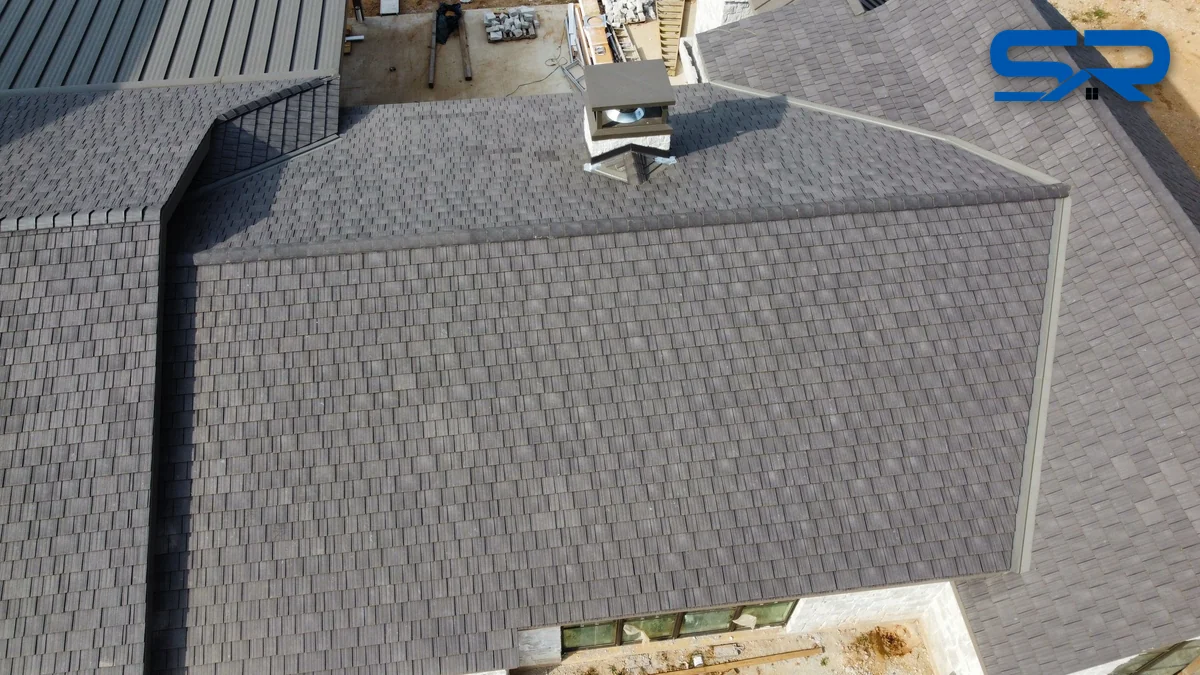
What does a roof inspection report include? It should tell you, in photos and plain words, what shape every part of your roof is in, where each problem is, how urgent it is, and whether you should leave the roof alone, repair it, or start planning a replacement. I’m Blake Snow. I’ve spent 30 years on roofs as the third generation of a family roofing business that goes back 75 years, and I’m an FAA-certified drone pilot. Here’s what goes into the free digital inspection report we give homeowners in Weatherford, and how to tell a real report from a one-page checklist.
Why this matters in Parker County
Hail comes through eastern Parker County in narrow paths, so one neighborhood gets hit and the next one doesn’t. NOAA’s Storm Prediction Center logged at least three 2026 storm days with 1-inch-or-larger hail near Weatherford:
| Date | Largest reported hail | Where (SPC report) |
|---|---|---|
| May 28, 2026 | 1.25” (half dollar) | Willow Park; 2 mi NNE of Hudson Oaks near Lake Weatherford |
| July 6, 2026 | 1.50” (ping pong ball) | 2 mi NW of Aledo |
| September 27, 2026 | 1.00” (quarter) | 2 mi NNW of Willow Park |
A storm report is a point on a map, not proof of damage. Most of a roof can’t be seen from the yard. That’s why the report matters: it’s the only record of what is actually up there.
The 8 parts of a roof inspection report
1. The basics
The date, the weather, the roof type and material, its approximate age, the number of stories and slopes, and how we got up there: walked, ladder, drone, or a mix. A steep or fragile roof often gets a drone flight instead of boots, so nothing gets broken during the inspection.
2. Drone photos of every slope
We fly the whole roof and photograph every slope, ridge, valley and penetration from above. You get a wide shot for context and close-ups for detail, so you can see what I see without climbing a ladder. Our drone roof inspections reach spots that are hard or unsafe to reach from a ladder, like the tops of steep two-story roofs and the backs of chimneys.
3. Thermal imaging
A thermal scan shows temperature differences across the roof and ceiling. Wet decking and insulation hold heat differently than dry areas, so the scan points us toward places where water may be getting in before a stain shows up inside. When something looks suspicious, we confirm it up close. See infrared roof leak detection for how that works on bigger roofs.
4. Findings tied to a location and a photo
This is the heart of the report. “Some damage on the roof” is useless. A useful finding says which slope, what is wrong, and which photo shows it. The items I find most often around Weatherford:
- Hail marks on shingles, vents, gutters and metal trim
- Pipe boots that are cracked or split from the sun
- Flashing at chimneys, walls and skylights that is loose, rusted or relying on caulk
- Lifted or missing shingles from wind
- Valleys with worn granules or debris holding water
- Gutters and downspouts that are dented, pulling loose or clogged
5. Metal roof items
A lot of homes, barns and shops out here have metal roofs, and they fail in different places. On metal, the report covers screws and rubber washers (they dry out and back out), panel laps, ridge cap and trim, sealant at penetrations, rust, and hail dents. Our metal roof repair and restoration page covers the fixes. On acreage, we can photograph the house, the barn, the shop and the detached garage separately in one visit, so each building has its own record.
6. A priority on every finding
Not everything needs fixing today. Each item should be marked as one of these:
- Urgent: water is getting in now, or will in the next rain
- Repair: a failure that hasn’t leaked yet; schedule it in dry weather
- Monitor: normal wear; we’ll photograph it again next time
7. What wasn’t inspected
An honest report says what it couldn’t check, such as an attic with no access or a slope too steep to walk. If a report claims to have seen everything on a complicated roof, ask how.
8. A plain recommendation
The report ends with one of three answers: leave it alone, repair it, or plan a replacement. If your roof is fine, I’ll tell you it’s fine. If it needs a pipe boot, you’ll hear about a pipe boot, not a new roof.
Red flags in a report you get from anyone
- No photos, or photos with no labels or locations
- A replacement recommendation with no specific findings behind it
- Pressure to sign something the same day
- Promises about what insurance will pay
- An offer to waive or “cover” your deductible. Texas law requires you to pay it, and we never waive it.
Using the report with insurance
If the report shows storm damage, it gives you dated photos you can share with your insurance company. We’ll meet your adjuster on the roof if you ask. We’re not public adjusters, we don’t negotiate claims, and we don’t promise outcomes. In Texas you generally have 1 year from the date of loss to file a claim, but check your policy. If your claim was already denied, we also offer a free second opinion. Our storm damage page has more.
How our inspection works
A residential inspection usually takes 15 to 45 minutes, depending on size, pitch and stories. You don’t need to be home unless there’s a leak; then we need to check the attic and ceilings. The inspection and the digital report are free, with no obligation. You can see all six of our free offers on the free roof inspection page.
If the report does lead to work, we’re certified with GAF, CertainTeed, Owens Corning, Atlas, Johns Manville, Carlisle, Tropical Roofing Products, Mule-Hide and Enviroshake, and many other roof manufacturers. Every roof is installed to manufacturer specs by certified installers. Our workmanship warranty runs from 10 years up to lifetime, depending on the job. We’re BBB A+ rated and fully insured, and we have 5.0 stars on Google at all three offices: Bridgeport, Decatur and Rhome.
We inspect roofs across Parker County, including Hudson Oaks, Willow Park, Aledo, Springtown and Millsap.
Get your free report
Want to see what’s really on your roof? Call (817) 733-9228 or request a free estimate, and I’ll send you the photos.