
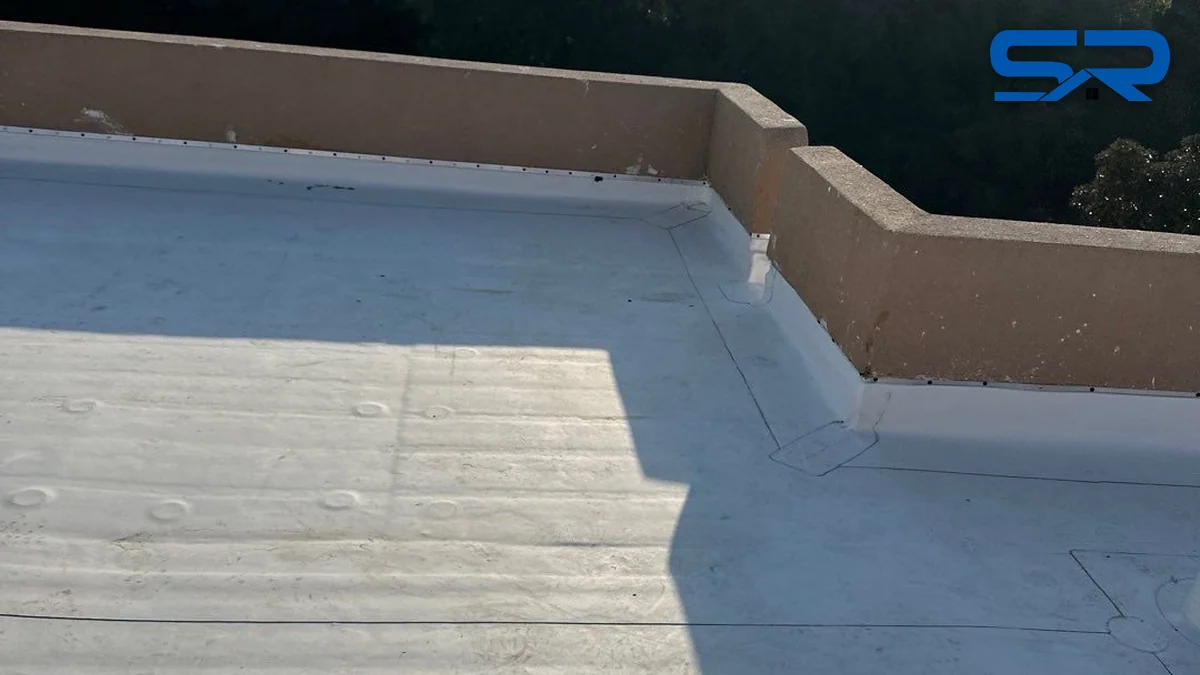
A lot of Westlake and Southlake estate homes look steep from the curb and still have a flat or near-flat problem out back: a porch cover, outdoor kitchen roof, porte-cochere, sunroom addition or the low tie-in where a new wing meets the old house. Shingles are the wrong product on those planes. That is where a Mule-Hide low-slope membrane belongs.
I’m Blake Snow. I’ve been roofing for 30 years and I’m certified with Mule-Hide. Here’s how I spec porches and additions on Westlake and Southlake estates using Mule-Hide’s published product pages — not guesswork.
Why low-slope sections fail on expensive houses
Most leaks I see on high-end homes are not in the middle of a steep field. They are at:
- the porch-to-wall flashing line
- the addition ridge or cricket where two roof systems meet
- scuppers, gutters and edge metal on flat covers
- foam or plywood porch decks that were never set up for a real membrane
Shingle underlayment rules assume a minimum pitch. When a patio cover sits at 1:12 or dead flat, asphalt shingles are past their published use. The fix is a membrane system detailed like a small commercial roof, then dressed with fascia and gutter that match the house.
What Mule-Hide publishes for this work
Standard TPO
- Polyester-reinforced single-ply
- 45, 60 and 80 mil thicknesses
- Widths from 4’ to 16’ by 100’ length
- White, gray and tan (plus Colorway options)
- Mechanically attached, fully adhered or ballasted
- Up to a 30-year system warranty available
TPO is usually my first conversation on a Westlake porch that sees sun all afternoon. White membrane reflects heat, heat-welded seams are inspectable, and 60 mil is a common residential sweet spot when the cover is not a roof deck people live on. Step up thickness when furniture, planters or service traffic are real.
Standard EPDM
- Non-reinforced sheet in 45, 60 and 90 mil
- Fully adhered or ballasted (not a mechanically attached field product in Mule-Hide’s Standard EPDM listing)
- Dusted or clean sheets; pre-taped seams available
- Up to a 30-year system warranty available
- Acrylic water-based bonding adhesive approved for up to a 20-year system warranty per the product page
EPDM still earns a place on simple, shaded porch covers where black membrane heat gain is acceptable and the crew wants a flexible sheet around odd corners. On a sunny Southlake outdoor kitchen roof, I usually steer the owner toward TPO instead.
Self-adhered modified bitumen
Mule-Hide’s SA-APP and SA-SBS cap sheets use Adeso dual-compound technology: modified asphalt on top, pressure-sensitive adhesive on the bottom, with SEALLap Ultra side laps and FASTLap granule-free end laps. They install without hot asphalt, fumes or torch work on the cap, which matters on occupied estate homes and finished outdoor living spaces. Mod-bit is often the right call when the porch already has a multi-ply history or the owner wants a granulated walking surface.
Warranty paperwork that actually matters
Mule-Hide’s warranty resource page lists material-only, residential single-family, limited lifetime (single-family) and commercial NDL / system forms for single-ply and mod-bit. Product pages for Standard TPO and EPDM advertise system warranties up to 30 years, with published design summaries for 10- and 15-year ballasted, adhered and mechanically attached assemblies.
What I put in writing on every Westlake / Southlake bid:
- Membrane product name, mil thickness and color
- Attachment method (adhered vs. mechanically attached vs. ballasted)
- Insulation / cover board, if any
- Which Mule-Hide warranty application we intend to file
- Our workmanship warranty, separate from the manufacturer form
“Certified with Mule-Hide” means we are on Mule-Hide’s certified contractor side. It does not automatically mint a 30-year NDL on a porch that used the wrong adhesive or skipped the published detail at the wall.
What ranking flat-roof articles miss on estate porches
Most DFW flat-roof pages talk commercial TPO vs. EPDM vs. mod-bit. Fine. On an estate addition they often skip:
- Matching the house. Edge metal, gutter color and fascia profile have to agree with stone, stucco or brick — the membrane can be white while the visible metal matches the steep roof.
- Tie-in to tile, slate or designer shingles. The low-slope system has to terminate correctly under the steep roof’s underlayment and metal, not caulk against the finished field.
- Drainage. A pretty outdoor kitchen roof that ponds against the house wall will stain stone and rot decking no matter which brand is on the label.
- Walk traffic. Grill islands and lounge furniture need walk pads or a thicker membrane plan up front.
Our TPO, flat roofs on homes, modified bitumen and EPDM pages go deeper on the systems. For storm documentation on low-slope sections, see storm damage.
Talk to us about your Westlake or Southlake porch
We detail Mule-Hide TPO, EPDM and self-adhered mod-bit on porches, patio covers and additions across Westlake, Southlake, Colleyville, Trophy Club and the rest of DFW. We’re certified with GAF, CertainTeed, Owens Corning, Atlas, Johns Manville, Carlisle, Tropical, Mule-Hide and Enviroshake, and we’re A+ rated with the BBB. Request a free inspection or call (817) 733-9228.