Pergolas in Southlake
Southlake has about 31,175 residents (2025 Census estimate), and many families choose it for Carroll ISD and stay for decades. Lots run from subdivision lots with a pool to one-acre-plus estate lots in the SF-1A district, and many houses are brick or stone under tile, slate, shake-look or architectural shingle roofs. That means a pergola or patio cover here has to look like it was built with a house that already set a high bar, and it has to clear the city's accessory rules and, often, an HOA.
Who builds pergolas in Southlake?
Snow Roofing & Exteriors does. Here are the facts you can check before you call anyone:
- 75 years as a family roofing and exterior business, and 30 years in the trade for owner Blake Snow.
- 5.0 stars on Google at all three offices: Bridgeport, Decatur and Rhome.
- Snow Roofing & Exteriors is BBB A+ rated, fully insured, with references available on request.
- Our own crews, who frame, roof, trim and finish pergolas, patio covers and pavilions from start to finish.
- One company for the whole outside of the house: roofs, gutters, siding, windows, soffit and fascia, paint, and outdoor living.
- A workmanship warranty from 10 years up to lifetime, depending on the job, in writing.
Pergola, patio cover or pavilion: which one fits
People in Southlake use these words loosely, and the city treats them differently, so it helps to pin down what you actually want before anything is drawn:
| Structure | What it does | What to watch |
|---|---|---|
| Open pergola | Beams and rafters with open slats overhead. Filtered shade, and a frame for fans, lights or climbing plants. | It doesn't keep rain off. Slat spacing and direction decide how much shade you get at 5 p.m. in July. |
| Attached patio cover | A solid roof off the back of the house over a patio or outdoor kitchen. | The tie-in to the house roof or wall is the most common leak spot, and the city treats it as part of the house. |
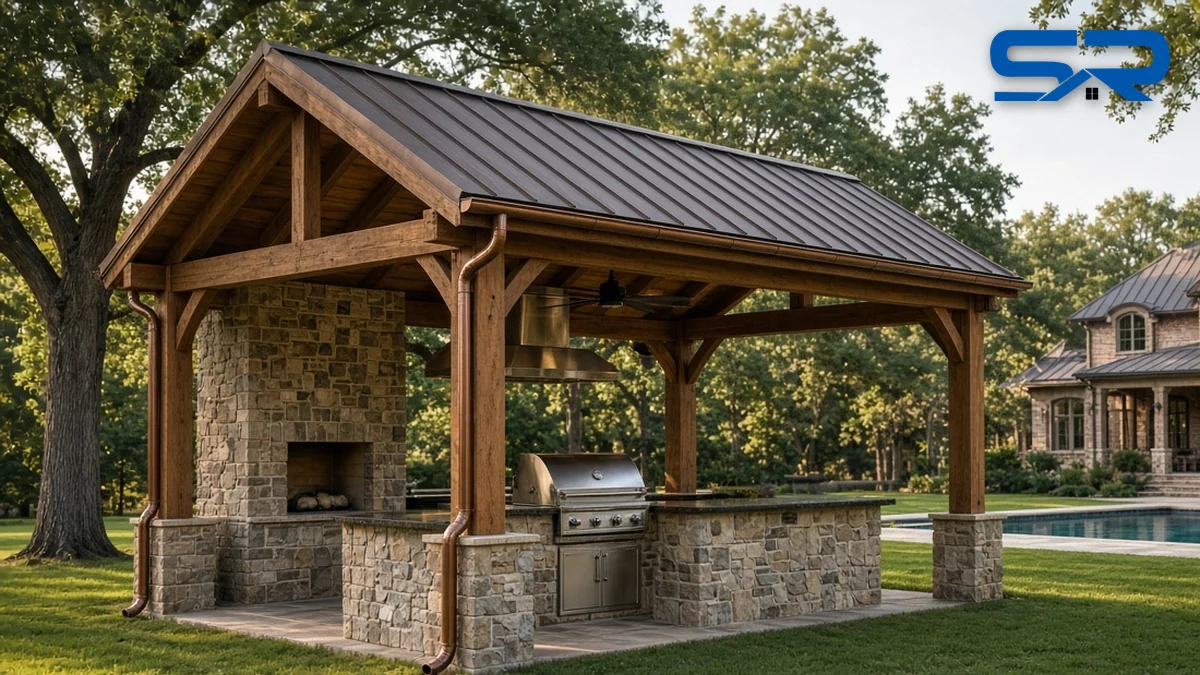
| Freestanding pavilion | A solid roof on its own posts, often over a kitchen, a fireplace or a seating area by the pool. | Footings, wind bracing and setbacks from property lines, the house and the pool. |
| Louvered roof | A manufactured aluminum roof with blades that open for light or close against rain. | Water drains through the beams and posts, so the drainage has to be planned. We'll lay it out next to a solid roof on cost, hail and upkeep. |
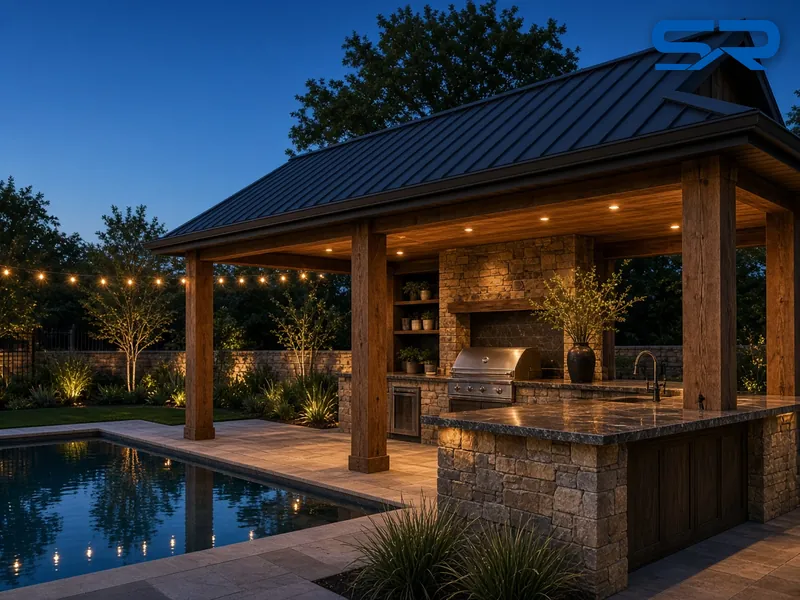
Many backyards end up with a mix: a solid cover over the kitchen and an open pergola over the seating, built to look like one design.
When Southlake requires a permit for a pergola
The city's permit list puts it simply: gazebos and patio covers need a building permit when they're more than 120 square feet or attached to the house. Painting and trim work are cosmetic and don't. Under the city's February 2026 accessory and addition guidelines:
- A pergola or cover attached to the house is permitted as a Residential Addition, at any size. "Addition" covers an open shade structure too.
- A freestanding pergola or pavilion over 120 square feet is permitted as a Residential Accessory Building, which the city says can be an open shade structure.
- Southlake's submittal checklist asks for a footing or pier plan for shade structures, and the guidelines call for foundation, footing or pier plans sealed by a Texas engineer with a cover letter referencing the code and the soil report, plus framing and roof plans with attachment details.
- A form survey is required on every accessory structure and addition. With no slab, it's taken at the piers or posts, and it's inspected before the foundation inspection.
- The general contractor and every subcontractor on the permit are registered with the city ($100 for a general contractor). An unconditioned accessory building is permitted at $50 plus $0.50 per square foot, with a $100 minimum. Those are city fees, not our price.
- Where the lot has a tree conservation or preservation area, a Tree Protection Permit comes first. In Carillon, the HOA's approval stamp is needed before the permit is submitted.
Where a pergola can go on a Southlake lot
Southlake's zoning ordinance (Section 34) has a rule written for pergolas specifically:
- Gazebos, arbors, pergolas and trellises under 120 square feet may sit in the side, rear or even front yard in Southlake's single-family districts. That's how an entry arbor or a small garden pergola can go where a bigger structure can't.
- Larger accessory buildings can't sit forward of the house, and they're limited to one story and 14 feet.
- Any accessory structure taller than 8 feet stays at least 10 feet from the property line. A building on a permanent foundation keeps 10 feet from a rear property line; one without a permanent foundation can be 5 feet away, unless the district says otherwise.
- Outdoor kitchens go in the side or rear yard only, and a permanent fire pit stays at least 10 feet from combustible structures, as approved by the Fire Marshal. A wood pergola counts, so we place the fire pit and the pergola together.
On SF-1A estate lots, an accessory structure of 500 square feet or more has to meet the house's own setbacks and can go up to 20 feet tall. The district's extra design standards for big accessory buildings, such as matching masonry and roof type, don't apply to structures without enclosing walls, such as gazebos and pergolas, though your HOA may still ask for them. When a structure won't fit the setbacks, the Zoning Board of Adjustment can grant a special exception; a 2023 case asked for 8 feet instead of 10 for a pergola over an outdoor kitchen. We'd rather design inside the rules, and we'll tell you up front if your lot needs that hearing.
Pergolas next to a Southlake pool
If a pool is being built too, Southlake's pool guidelines let detached structures of 120 square feet or less ride on the pool permit when they're drawn on the pool and site plans. Arbors and gazebos over 120 square feet, and any attached patio cover, need their own permit. Pergola footings near the pool are planned with the pool's excavation so neither undermines the other.
What makes a pergola last in North Texas
- Footings sized for clay soil. North Texas clay swells and shrinks with the weather. Posts sit on concrete piers or footings drawn for the structure, not on pavers or a thin patio edge.
- Connections that hold against wind. A pergola is a big frame that catches gusts from every side. Beams, rafters and posts are tied together with structural connectors and bracing so the frame can't rack or lift.
- Wood kept off the concrete. Post bases hold the wood up off the slab so it doesn't wick water and rot at the bottom, the first place an old cedar pergola fails.
- The right material for the look. Cedar takes stain beautifully but needs resealing. Painted wood has to be primed on every face. Steel and aluminum frames cost more up front and need far less upkeep.
- Shade aimed at the afternoon sun. We set the rafter and slat direction for where the sun is at the hours you'll actually use the space, which in most backyards means the west side.
- Power planned in. Fans, lights, heaters and outlets are roughed in by the right trade, under their own permits, before the ceiling or slats close it up.
Why a roofing company should build the covered part
An open pergola is carpentry. A covered one is a roof, and most patio cover problems are roof problems:
- The tie-in. Where a cover meets the house, we flash it into the roof or the wall with metal, and we fasten the ledger to the house framing, not to brick or stone veneer. Caulk alone is how most patio covers start leaking.
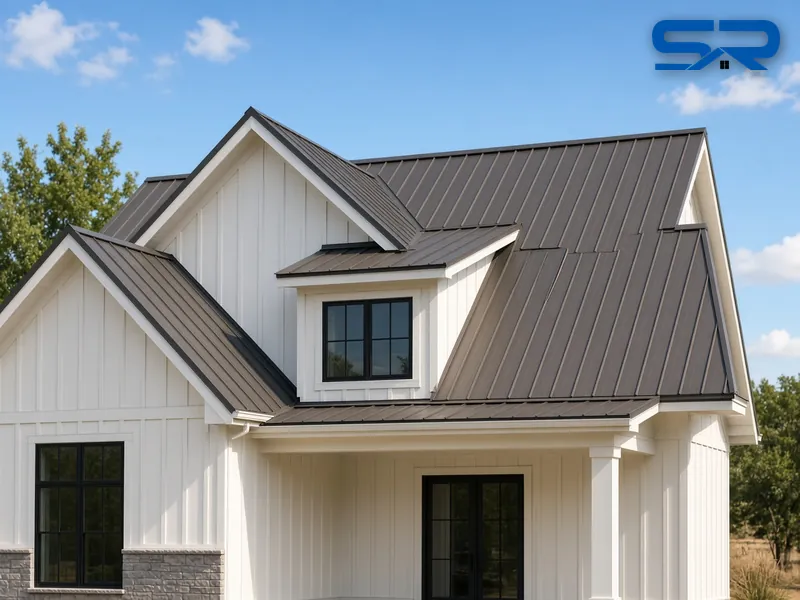
- Pitch and material. Shingles need at least a 2:12 pitch under the residential code, and clay or concrete tile needs more. When a cover is too flat for the house's roofing, standing seam in a matching color is usually the cleanest answer. We form it on our own roll formers in 24 or 26 gauge, and metal lead time is typically 1 to 2 weeks.
- Water off the patio. Gutters and downspouts sized for the cover and tied into the house's drainage, so the cover doesn't dump water onto the patio or against the foundation.
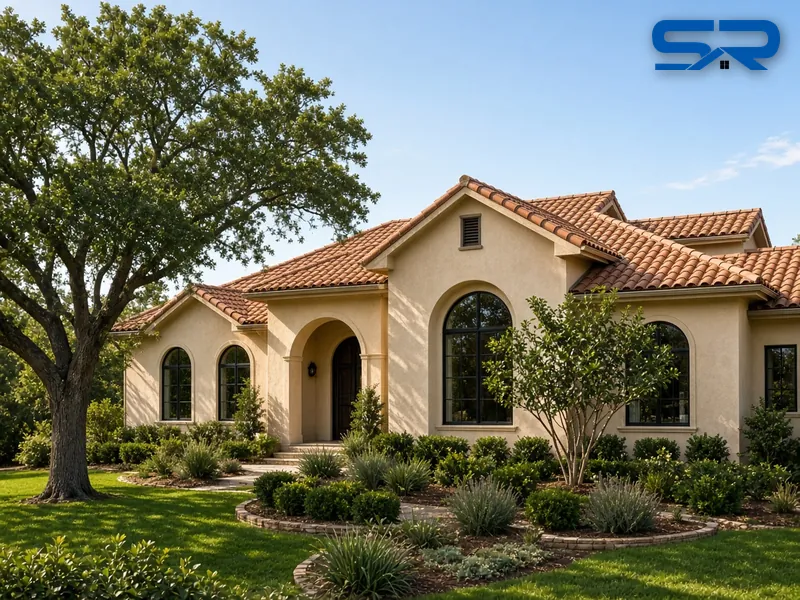
- Matching the house. On tile, slate, shake-look or designer shingle houses, the cover should look like it came with the house. See patio covers that match tile with standing seam.
Hail around Southlake
NOAA's Storm Events Database lists 45 reports of hail 1.75 inches (golf-ball size) or larger within about 10 miles of Southlake from 2016 through the September 2026 update. The biggest came on June 11, 2023: 4-inch hail near Grapevine Reservoir, about five and a half miles away, and 4.25-inch hail near Bartonville. On April 28, 2021, 3-inch hail fell in Keller about five miles west, and on May 27, 2024 2.75-inch hail hit Bedford, about five and a half miles south. The Storm Prediction Center logged 1-inch hail along Hwy 114 in Grapevine on June 2, 2026.
An open pergola shrugs off most hail; a covered one takes it like any roof. We build covers with the same underlayment, flashing and edge metal as the house, and standing seam won't crack or lose granules the way shingles do, though very large hail can dent any metal.
How a pergola job runs with us
- Site visit. We look at the back of the house, the roofline, the sun, the pool and the property lines, and talk about how you'll use the space.
- Design. We can bring in an architect to spec a new build, or build to plans you already have.
- Written scope. Size, height, materials, finish, roof type if it's covered, footings, gutters, fans and lights, in writing, with no surprises later.
- Approvals. Your HOA's approval first, then the permit with the City of Southlake. We prepare the site plan and the drawings, including the engineering the city asks for.
- Build. Our own crews build it from start to finish, with the electrician scheduled around the framing.
- Inspections and walk-through. We call for the inspections, walk the finished structure with you and give you the workmanship warranty in writing.
More for Southlake homeowners
Planning the whole backyard? See outdoor kitchens in Southlake and pool houses in Southlake. For the house itself: standing seam, tile roofing, slate roofing, siding and our Southlake roofing page. Nearby: pergolas in Westlake and pergolas in Colleyville.
We're certified with GAF, CertainTeed, Owens Corning, Atlas, Johns Manville, Carlisle, Tropical Roofing Products, Mule-Hide and Enviroshake, and many other roof manufacturers.
Residential warranty: a workmanship warranty from 10 years up to lifetime, depending on the job, with manufacturer warranties up to lifetime. Manufacturer coverage depends on the product and brand, and on the project qualifying for that manufacturer's program. We put the exact warranty for your roof in writing.
Certified, with 30 years installing every major roofing brand, a family roofing business going back 75 years, and over $80 million in completed roofing projects. 5.0 stars on Google at all three of our offices.
Request a free inspection or call (817) 733-9228. Small repairs are welcome too.