Wet mils, dry mils and volume solids
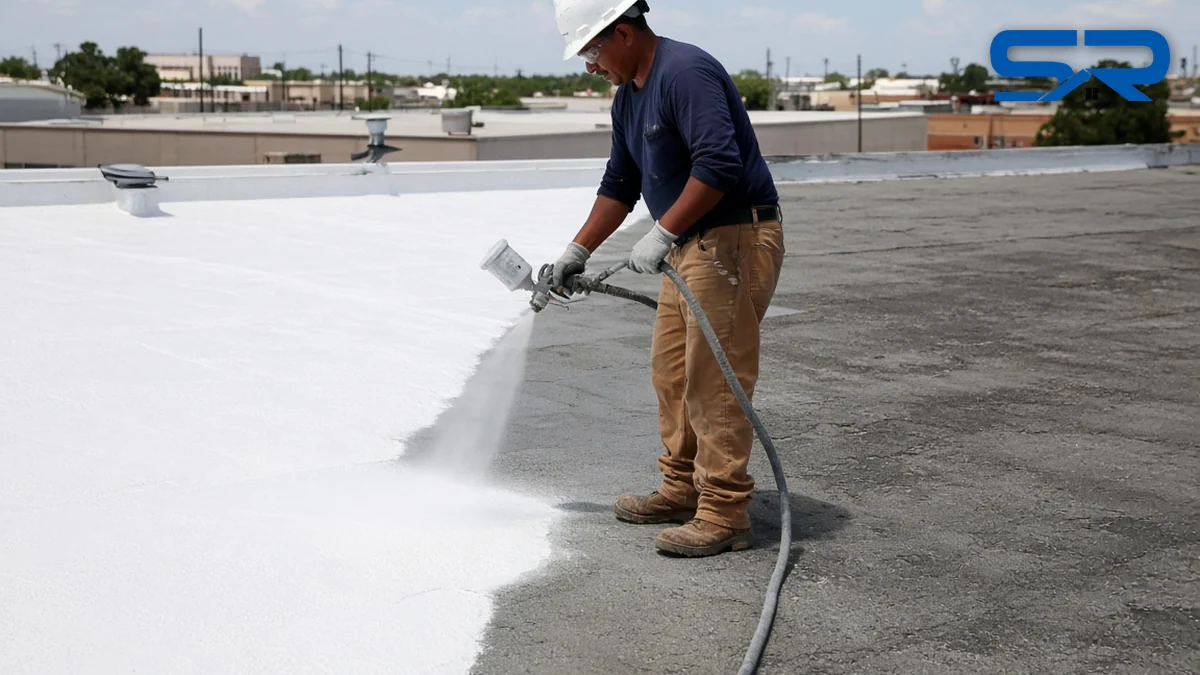
A mil is a thousandth of an inch. A coating goes on at a wet film thickness (WFT), then water or solvent leaves as it cures, and what remains is the dry film thickness. The share that stays is the volume solids on the data sheet.
| Formula | Use it to |
|---|---|
| DFT = WFT × volume solids | See what a wet reading will cure to |
| WFT = DFT ÷ volume solids | Set the wet-mil gauge target for the crew |
| Coverage (sq ft per gallon) = 1,604 × volume solids ÷ DFT | Figure gallons for the roof. 1,604 is one gallon (231 cubic inches) spread 1 mil thick, in square feet |
Worked examples
Example volume solids below are round numbers for the math only. Always use the volume solids on the data sheet of the exact product.
| Coating (example solids) | Target DFT | Wet mils to apply | Coverage per gallon | Gallons per 10,000 sq ft (before waste) |
|---|---|---|---|---|
| High-solids silicone (90%) | 20 mils | 22.2 | 72 sq ft | 139 |
| High-solids silicone (90%) | 30 mils | 33.3 | 48 sq ft | 208 |
| Acrylic (50%) | 20 mils | 40.0 | 40 sq ft | 249 |
| Acrylic (50%), two coats | 10 mils each | 20.0 each | 80 sq ft per coat | 125 per coat |
Same dry thickness, very different gallons. That's why comparing bids by gallons or by "coats" tells you little; compare by dry mils. Rough surfaces like granulated cap sheets, gravel-surfaced built-up roofs and spray foam take more material than the math shows, and so do seams, laps and fastener heads.
Standards that apply
| Coating | ASTM standard | Notes |
|---|---|---|
| Acrylic | D6083 | Water-based; best where water drains off. See acrylic coatings. |
| Silicone | D6694 | Written for spray foam roofs and widely cited for silicone generally; handles ponding best. See silicone coatings. |
| Moisture-cured polyurethane | D6947 | Tough under foot traffic and impact. See urethane coatings. |
On spray foam roofs, the International Building Code's sprayed polyurethane foam roofing section requires a protective coating meeting one of those three standards, applied no sooner than 2 hours and no later than 72 hours after the foam. See SPF density and R-value specs.
Warranty terms follow thickness
Coating manufacturers publish their warranty terms by system and by minimum dry mils, and a longer term generally means more dry mils. We spell out the system, the dry mils and the term in the proposal before work starts. We have hands-on experience with coating systems from American WeatherStar (we're an American WeatherStar Approved Contractor), Carlisle and Tropical Roofing Products, plus EpoxyFlex, our own private-label coating, and we apply every major brand. See the coating brands we have experience with.
How we check thickness on your roof
- Test first. We walk the roof, fly a drone for photos of areas that are hard to reach safely, and run drone thermal (infrared) scans that help show where water has gotten under the surface. Core cuts show whether the insulation is dry; a coating over wet insulation only hides the problem. See coating vs replacement.
- Adhesion test of the coating on your actual surface before the job
- Wet-mil gauge readings while the crew sprays or rolls, against the WFT target
- Gallons used vs. area checked against the coverage math
- Cut samples or mil readings after cure where the manufacturer's inspection calls for them
- Photo report. Every inspection comes with a free digital photo report, so you see what we see.
What to ask on a coating bid
- Product name, chemistry and volume solids
- Target dry mils, overall and at seams and details
- Primer, if any, and the adhesion test result
- Warranty term and the dry mils it requires
- What happens to wet insulation found during the job
Who applies it
Owner Blake Snow has almost 40 years in the business, and the Snow family has been roofing in this market for 75 years. Snow Roofing started as a tier-one commercial company doing only large-scale work, including casino properties on the Mississippi Gulf Coast such as the Imperial Palace in 2006, right after Hurricane Katrina, before it expanded into residential. We've also done full exterior and interior rehabs on national-brand hotel properties around the DFW Metroplex. No job is too big or too small, Snow Roofing does them all. We're certified with GAF, CertainTeed, Owens Corning, Atlas, Johns Manville, Carlisle, Tropical Roofing Products, Mule-Hide and Enviroshake, and many other roof manufacturers. We offer same-day response in almost every case, and we answer leak and storm calls 24/7 at (817) 733-9228.
Up to: commercial roof coatings · roof coatings.
Code sections and standards are summarized in plain English from the published documents. Your building official, the manufacturer's current specification and the warranty document have the final word.
Commercial warranty: a workmanship warranty from 10 years up to lifetime, depending on the job, plus manufacturer NDL (no-dollar-limit) warranties that typically run from 10 to 40 years, depending on the manufacturer, the system, and manufacturer approval of the finished job (we do not promise a specific NDL term until that approval is in place). Manufacturer coverage depends on the product and brand, and on the project qualifying for that manufacturer's program. We put the exact warranty for your roof in writing.
Certified, with almost 40 years in the business for owner Blake Snow, installing every major roofing brand, a family roofing legacy going back 75 years, and over $80 million in completed roofing projects. 5.0 stars on Google at all three of our offices.
Request a free inspection or call (817) 733-9228. Small repairs are welcome too.