
Common problems with metal roofs in Texas almost never start with the metal. They start with how the roof was put on and which panel was picked for the house. I’m Blake Snow, I’ve been roofing for 30 years in a family business that goes back 75 years, and when I get called out to a metal roof that’s giving somebody trouble around Keller, Fort Worth or Wise County, it’s usually one of the problems below.
A metal roof is one of the best roofs you can put on a Texas house. But “metal” covers a lot of ground, from a 26-gauge standing seam roof torn off to the deck to screw-down panels laid over two layers of old shingles. Here’s the honest list, what causes each problem, and how to avoid it before you sign.
The short answer
- #1: metal laid over an old roof. No tear-off means no look at the decking and fasteners that don’t hold the same way.
- #2: exposed screws in the Texas sun. Rubber grommets on R-panel, ag panel and PBR usually start breaking down somewhere between 7 and 12 years.
- Flashing at walls, valleys, chimneys and pipes causes more leaks than panels do.
- Hail can dent steel; gauge matters, and a dent usually isn’t a leak.
- Condensation, oil canning and finish fade are the rest of the list, and each one has a fix at install time.
1. Metal installed over an existing roof
This is one of the most common issues I see. A lot of people put metal over an existing roof and don’t tear off. It’s faster and it looks the same from the street, so it’s an easy sell.
Here’s the problem. Metal expands and contracts with every hot afternoon and cool night. Over an existing roof, the panels and clips won’t fasten the same way they do going straight into the deck. And with the old shingles left on, nobody ever sees the decking. If there’s rotted wood under there, it stays there, under your brand-new roof.
We tear off to the deck. That way any rotted decking gets photographed, shown to you and replaced, and the fasteners go straight into solid wood, which is more secure. If somebody has offered you metal over shingles, read our metal over shingles page before you decide.
2. Exposed fasteners and sun-baked grommets
The other main question is whether to go with R-panel or standing seam. R-panel, ag panel and PBR all have exposed fasteners: screws driven through the face of the panel, each one sealed by a rubber grommet. In Texas heat, those rubber grommets usually start breaking down somewhere between 7 and 12 years. When a grommet cracks, the screw hole becomes a leak.
On top of that, every exposed screw is fixed in place while the panel around it moves with the heat. Over time that movement can work screws loose.
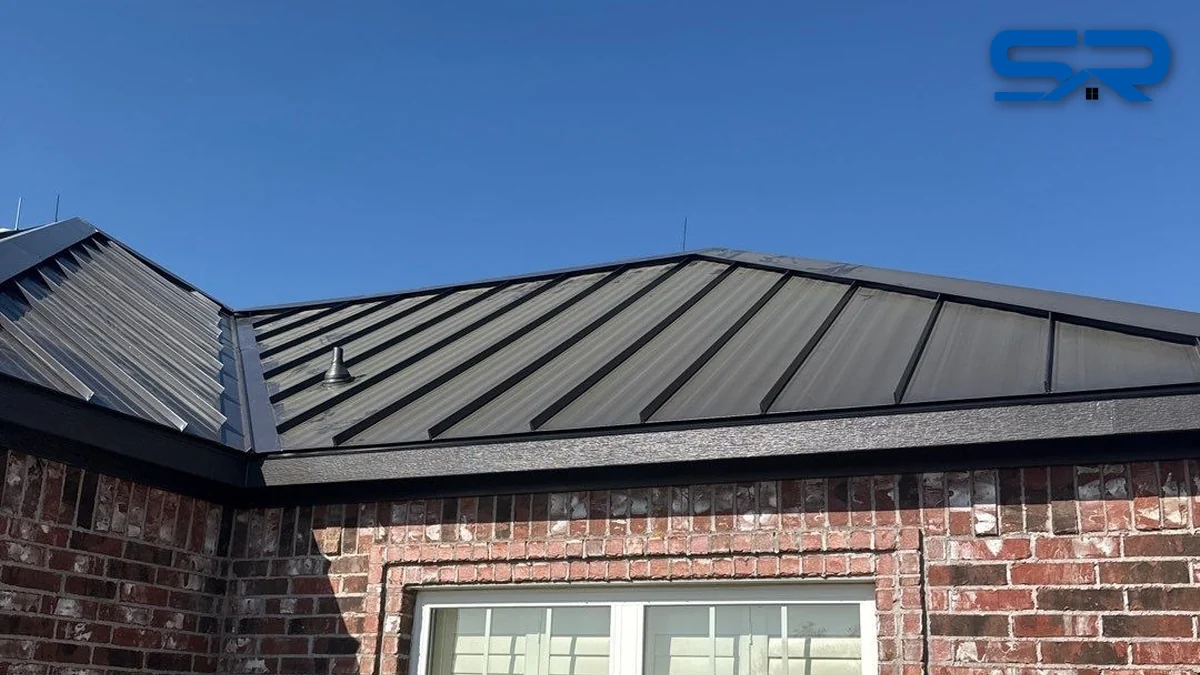
Standing seam is a concealed-fastener system. The clips and fasteners sit under the seams, out of the sun and weather, so you never have to worry about the fasteners breaking down. That’s why I steer most homeowners toward standing seam for a house. R-panel and PBR are still a great value for shops, barns and outbuildings, as long as you know the screws will need attention down the road. For the side-by-side, see hidden fasteners vs. exposed screws.
We form both on our own roll formers, in 24 or 26 gauge, and our metal lead time is typically 1 to 2 weeks.
3. Flashing at walls, valleys, chimneys and pipes
Water rarely gets through the flat of a metal panel. It gets in where the roof stops, turns or gets cut through: sidewalls, headwalls, valleys, chimneys, skylights, plumbing pipes and vents. A roof that leans on caulk at those spots instead of properly lapped metal flashing will leak once the sealant dries out in the sun.
Ask every bidder how they flash each of those spots. I went through each detail in flashing details that make or break a metal roof in Keller.
4. Pipe boots
Rubber pipe boots around plumbing vents are often the shortest-lived part of any roof, metal included. A boot set across a rib, or a cheap boot that splits in the sun, is a common leak. It’s a small part, and worth checking on every inspection.
5. Hail dents
North Texas gets real hail, and Keller is no exception. The NOAA Storm Prediction Center’s storm reports for August 26, 2026 list dime-size hail with sporadic quarters 3 miles northwest of Keller near Park Vista Blvd and Keller Haslet Rd, and 1 to 1.5-inch hail near Alliance, 2 miles southeast of Haslet. The September 21, 2026 reports list quarter-size hail near Keller Smithfield Rd, 1 mile east-northeast of Keller.
Large hail can dent steel, and thinner panels dent more easily. That’s one reason we never go thinner than 26 gauge (see 26 vs. 29 gauge). A dent in the flat of a panel usually doesn’t make the roof leak, but a storm can still damage seams, trim, flashing and pipe boots, so those get checked too. If a storm damaged your roof, insurance may cover it. In Texas you generally have 1 year from the date of loss to file a claim, but check your policy. More on storms in metal roofs and hail.
6. Condensation under the panels
Warm, moist air from the house can hit the back of cold metal and condense, especially on cool mornings. Over time that moisture can rot decking and corrode metal from the back side. The fix is built in at install: a proper underlayment over solid decking and balanced attic ventilation. That’s another reason tear-off matters. More in our condensation control post.
7. Oil canning
Oil canning is soft waviness in the flat part of a panel that shows up in low morning or evening light. It’s cosmetic and doesn’t cause leaks on its own. Heavier gauge and careful handling and fastening help keep it down. Sharp creases, split seams or popped panels are a different thing, and those need a look.
8. Finish fade and chalking
The Texas sun is hard on paint. A low-grade finish can fade or chalk over time. Ask what paint system is on the panels and what the finish warranty covers before you pick a color. Our standing seam colors and finishes post walks through choosing one for brick and stone homes.
How to avoid all of this before you sign
- Tear-off to the deck, with rotted decking replaced, in writing.
- The right panel for the building: standing seam for the house, R-panel or PBR where exposed screws make sense.
- Gauge stated: 24 or 26 gauge.
- Every flashing detail spelled out: walls, valleys, chimney, pipes, eaves and ridge.
- Underlayment and ventilation included.
- Workmanship warranty in writing. Ours runs from 10 years up to lifetime, depending on the job.
Already have a metal roof with a problem? Many can be fixed without replacing the whole roof. See metal roof repair and restoration.
Get your metal roof looked at
We’ll inspect your roof, new or old, and give you a free digital photo report of what we find, plus a free written estimate. We’re certified with GAF, CertainTeed, Owens Corning, Atlas, Johns Manville, Carlisle, Tropical Roofing Products, Mule-Hide and Enviroshake, and many other roof manufacturers. We’re fully insured, BBB A+ rated, with references available on request, and we have 5.0 stars on Google at all three offices: Bridgeport, Decatur and Rhome.
See our Keller metal roofing and Keller standing seam pages, our Southlake and Fort Worth pages, or contact us. Call (817) 733-9228, or use the estimate form below.