
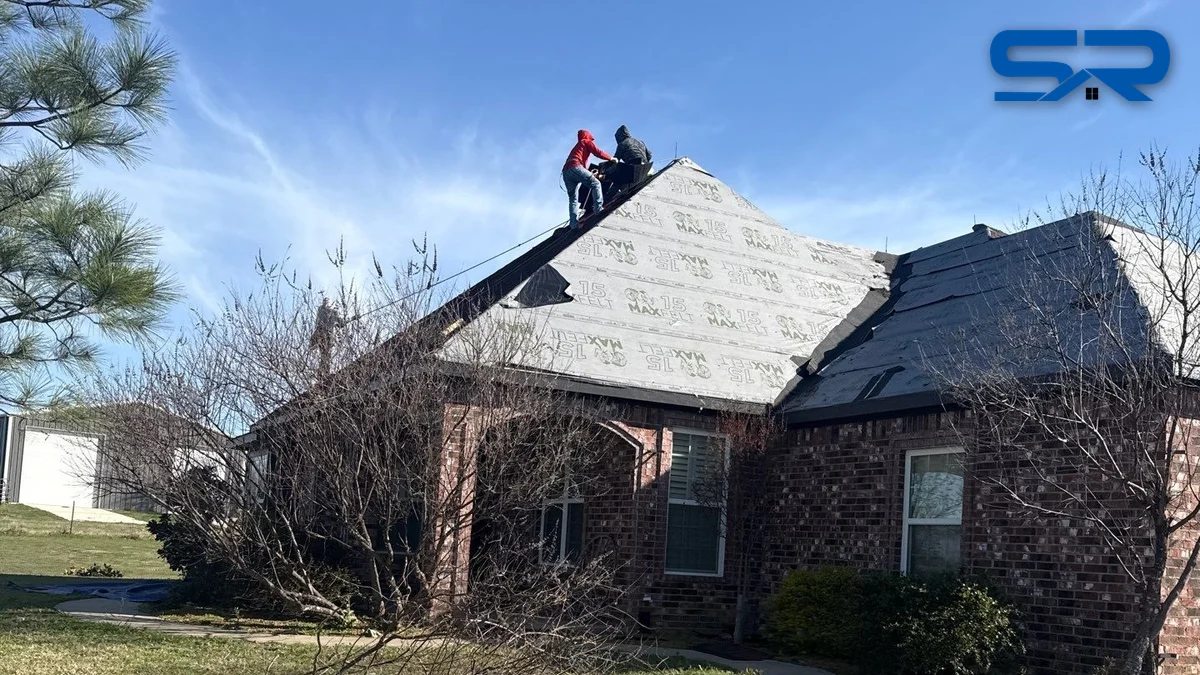
Do you need a permit to replace a roof in Fort Worth? It depends on what’s under your shingles. The City of Fort Worth says a shingle-only replacement on a house doesn’t need a building permit, but the moment decking, sheathing, rafters or ridge boards get replaced, it does. On most of the Fort Worth homes I tear off, we find at least a few bad boards, so I plan for the permit from day one and handle it for you.
I’m Blake Snow. I’ve been around and in the roofing business for almost 40 years, and the Snow family roofing legacy has been in this market for 75 years. When homeowners ask me how permits and inspections work, here’s my answer, word for word with only the speech-to-text cleaned up:
“Permits and inspections are easy. You just file for a permit with the city. Generally, they’re going to want a copy of my insurance, and then they’ll approve the permit as long as I’m registered and pay for the permit. Once the roof is replaced, sometimes we can send them pictures. A lot of times they’ll come out and meet us and do an on-site inspection, just to make sure everything was done up to code, and then they’ll approve the final inspection and give you a green tag, meaning you did everything to code and city standards.”
Here’s what that looks like on a real job, and what the city’s own rules say.
When Fort Worth requires a roofing permit
The city’s residential permitting page and its roofing FAQ spell it out for one- and two-family homes:
| What the job includes | Permit? |
|---|---|
| Tear off and replace shingles, decking stays | No permit |
| Replace any decking, lathing or sheathing boards | Yes |
| Replace rafters or ridge boards | Yes |
| Change the pitch of the roof | Yes, with construction plans and elevation drawings |
| Replace exterior windows or doors | Yes |
| Replace missing or decayed siding | Yes |
The city also notes there’s a limit on how many layers of shingles a roof can carry, so a “lay it over the old one” job isn’t automatically allowed. Apartments with three or more units on a lot are handled as commercial construction, which is a separate permit track.
Here’s the honest part: nobody can see the decking through the shingles. A good estimate says what happens if we find rotten or delaminated boards after tear-off. On our jobs, if decking needs replacing, it gets replaced, and the permit gets filed. I’d rather do it right than hope nobody notices.
How we handle the permit, step by step
- We inspect first. A free roof inspection with a free digital photo report shows soft spots, sagging and attic clues that point to decking problems.
- We file with the city. The city requires the applicant to be a registered building contractor, or a homeowner who qualifies for a homestead permit on the house they live in. We’re registered, we send a copy of our insurance, and we pay the permit fee.
- We do the work to code. More on that below.
- Final inspection. Sometimes the city accepts photos. A lot of times the inspector meets us on site.
- Green tag. When the work passes, the city approves the final inspection and issues a green tag. Keep that record with your house papers; it helps when you sell.
You shouldn’t have to call the city, chase an inspector or stand in line. That’s our job.
What the code requires, permit or not
Skipping a permit on a shingle-only job doesn’t mean skipping the code. Per the city’s roofing FAQ:
- Drip edge and crickets are required when re-roofing, even if your old roof didn’t have them.
- No new decking over old decking. Bad boards come out; you can’t sheet over them.
- Sound decking can stay. If the roof met code when it was built and the sheathing is in good shape, it doesn’t have to be replaced just because the code changed.
- Underlayment must meet the manufacturer’s instructions or Section R905 of the 2021 International Residential Code, whichever is stricter. Fort Worth’s amendments don’t require an ice-barrier underlayment, but some manufacturers call for one in valleys and other spots, and we follow the manufacturer.
That last point matters for your warranty. We install to manufacturer specs, which is how we can register manufacturer warranties, and our own workmanship warranty runs from 10 years up to lifetime, depending on the job. For what’s under the shingles, see my post on roof decking and attic ventilation.
Switching to metal, tile or slate
The city’s guidance is written around shingle work. If you’re moving up to standing seam metal, changing the roof’s pitch, or adding heavier material like tile or slate, we confirm the permit question with the city before we start. For why I recommend metal first here, read the best roof for Fort Worth’s climate. Every metal roof we install is Class 4 impact rated under UL 2218.
HOAs, historic districts and the city line
- HOA approval is separate. Your HOA may need to sign off on color and material even when the city doesn’t need a permit. Our HOA-compliant roof replacement guide covers the packet.
- Historic districts. If your home is in one of Fort Worth’s historic districts, changing the look of the roof may need design review, so ask before you pick a new material.
- Every city is different. Haltom City, North Richland Hills, Benbrook, Saginaw and Keller each set their own rules, and some require a permit for any re-roof. In Highland Village, for example, a permit is required before any alteration or repair. We check the rules for your address, not just Fort Worth’s.
Questions to ask any roofer about permits
- Will you file the permit, or do you expect me to?
- What happens, and what does it cost, if you find bad decking after tear-off?
- Will you install drip edge and crickets where the code requires them?
- Who schedules the final inspection, and will I get the green tag record?
- Are you fully insured, and can I see proof?
Why Fort Worth homeowners call us
Snow Roofing started as a tier-one commercial company doing only large-scale work, then expanded into residential roofing. We’ve done multimillion-dollar projects down to the average home. No job is too big or too small, Snow Roofing does them all. We’re fully insured, BBB A+ rated, references are available on request, and we have 5.0 stars on Google at all three offices: Bridgeport, Decatur and Rhome.
We also do much more than roofing. If your project includes new siding or replacement windows, which also need a permit in Fort Worth, we handle those permits the same way. We build lifetime relationships, not one-and-done jobs, we honor our warranty, and we’re around whenever you need us.
Call (817) 733-9228 or request a free estimate, and I’ll tell you up front whether your roof needs a permit and take care of it from filing to green tag.