
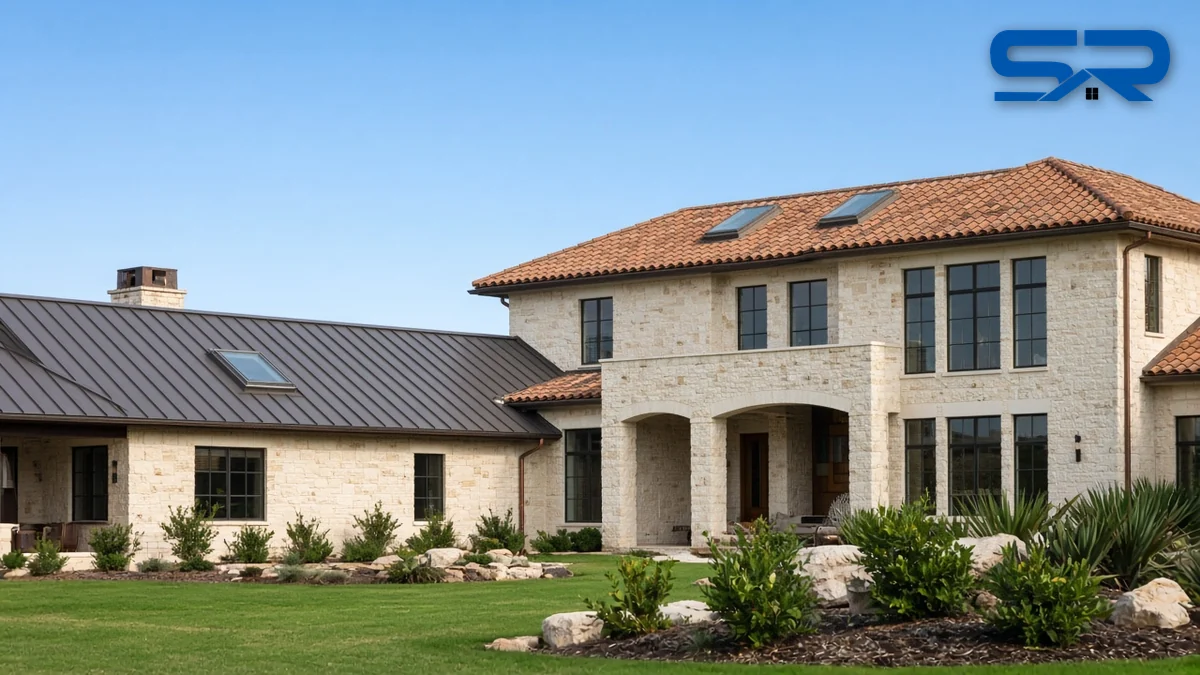
Skylights on tile, slate and standing seam roofs in Southlake and Colleyville can be beautiful, and they can also be the first place a premium roof leaks. The skylight itself is rarely the problem. The flashing around it is. Each roof system sheds water differently, so a skylight that’s fine in a shingle roof needs a different approach in clay tile, natural slate or standing seam metal.
I’m Blake Snow. I’ve been roofing for 30 years, I’m the third generation in a family business that goes back 75 years, and our crews have completed over $80 million in roofing projects. We install tile, slate and standing seam roofs across Southlake, Colleyville and the towns around them. Here’s how I plan skylights on each of those roofs.
The short version
- The flashing system matters more than the skylight brand. Use the kit or curb detail made for your roof type.
- Tile needs high-profile flashing. A pleated apron that forms to the tile, plus side gutters.
- Slate gets woven step flashing, usually copper on a copper-detailed home.
- Standing seam needs a raised curb, laid out between the seams, with a back pan or cricket lapped under the panels above.
- Wide skylights need a cricket on the upslope side.
- A reroof is the best time to add, move or replace skylights.
Curb-mounted vs. deck-mounted skylights
There are two common ways to mount a skylight:
| Mount | How it sits | Best fit | Watch out for |
|---|---|---|---|
| Deck-mounted | Fastened directly to the roof deck, low profile | New roofs and full replacements on steeper slopes; clean look on tile and slate | Not suitable for low-slope roofs, per VELUX |
| Curb-mounted | Sits on a framed wood or metal curb | Standing seam, low-slope sections, replacing older curb units | The curb has to be flashed like a small chimney |
VELUX’s mounting and flashing guide lists deck-mount or curb-mount for clay and concrete tile, and curb-mount or self-flashed units for flat and low-slope roofs. On a big Southlake or Colleyville estate with tile on the main house and standing seam on a porch or wing, it’s normal to use deck-mounted units in the tile and a curb-mounted unit in the metal.
Skylights in clay and concrete tile roofs
Tile is high-profile. Water runs in the pans between the tile humps, so a flat apron can’t seal the bottom of a skylight. A tile skylight needs flashing that forms to the profile.
VELUX makes two tile kits:
- EDW for deck-mounted skylights. Its product data sheet lists a pleated aluminum sill apron, continuous side gutters and a saddle flashing with tile support, for profiles up to 4 1/2 inches.
- ECW for curb-mounted skylights on 2x6 or 2x8 site-built curbs, on tile roofs from 3:12 to 20:12, per the ECW brochure.
How we install it on tile:
- Pull the tile around the opening and set it aside to reuse where we can.
- Turn the underlayment up the curb or frame and add self-adhered membrane at the corners.
- Set the side gutters so water landing beside the skylight runs past it, not into the battens.
- Form the pleated apron into the tile below so water drops back onto the tile pans.
- Cut and reset tile tight to the flashing, fastened per the tile maker’s specs.
- Check the head. The saddle at the top has to carry water around the unit, and wider units get a cricket.
On a clay tile reroof, the skylight flashings get replaced with the underlayment. On a tile roof that’s otherwise sound, we can lift and relay just the tile around a leaking skylight. See tile roof repair and reset, and our Southlake and Colleyville tile pages.
Skylights in natural and synthetic slate roofs
Slate is flat and laid in overlapping courses, so skylights are flashed the old-school way. NRCA recommends flashing a skylight like a chimney, with separate apron, step, cricket or backer flashings and counterflashing, according to Professional Roofing. On slate:
- Apron flashing goes across the bottom, on top of the slate below.
- Step flashing is woven in with each course up both sides, one piece per slate.
- A backer or cricket goes across the top, under the slate above.
- Counterflashing comes down over the steps, often part of the skylight frame.
On a natural slate home with copper valleys and gutters, we use copper steps and aprons so the metals match and last as long as the slate. Don’t mix copper with aluminum or galvanized metal where water runs from one to the other. Synthetic slate is flashed the same way, following that product’s installation guide. More on our Colleyville slate page and in copper flashing for valleys and gutters on slate and tile in Colleyville.
Skylights in standing seam metal roofs
A standing seam roof moves with heat, and the seams stand up like small dams. A skylight dropped in without a plan can trap water against a seam and send it sideways into the curb. On standing seam:
- Use a raised curb. It lifts the skylight above the water running in the pans.
- Lay out the seams first. The ATAS metal roof installation manual recommends at least 6 inches between the curb sides and panel seams and at least 12 inches between the panel end and the upslope diverter. Moving the opening a few inches to fit the panel layout is cheaper than fighting it later.
- Lap everything with the water. Panels below and beside the curb go first. The back pan or cricket above slides under the panels above. Sealant is a backup, never the main seal.
- Match the metal. We bend the curb flashings, back pan and cricket from the same coil and color as the panels.
- Let the panels move. Flashings at the seams are detailed so the panels can still expand and contract.
We run our own roll formers for standing seam in 24 and 26 gauge, and metal lead time is typically 1 to 2 weeks, so the curb flashings are made to match. See standing seam in Southlake and standing seam in Colleyville.
When a skylight needs a cricket
A wide skylight blocks the slope, and water piles up behind it. NRCA suggests a cricket on the upslope side of skylights more than 24 inches wide when curb height permits. Metal roofing guides commonly call for one on penetrations over about 30 inches. A cricket is a small peaked section that splits the water and sends it around both sides. On tile, slate and metal alike, we frame it with the roof, not as an afterthought.
Adding, moving or replacing skylights during a reroof
A reroof is the best time to deal with skylights:
| Situation | What I usually recommend |
|---|---|
| Skylight is newer and sound | Reflash it with the new roof using the right kit or curb detail |
| Glass is fogged, cracked or the seal is failing | Replace the unit with the reroof |
| Old curb-mounted unit on a steep tile or slate roof | Consider a deck-mounted unit with matching flashing |
| Adding a new skylight | Frame the opening and cricket before the new roof goes on |
| Skylight on a low-slope section | Curb-mount it, or consider a flat roof detail |
Interior work matters too. A new skylight needs a framed light shaft and drywall finish inside. On estate homes we plan the shaft with the interior trades so the roof opening and the ceiling opening line up.
Hail and skylights around Southlake and Colleyville
Skylights and their flashings take hail like the rest of the roof. NOAA’s Storm Events Database lists 1.5-inch hail at Colleyville on May 27, 2024 and 4-inch hail near Grapevine Reservoir on June 11, 2023, and 1.25-inch hail was reported in Southlake on April 28, 2026. After a storm we check the glazing, the curb, the flashing and the tile or slate around each skylight, and note it in a digital photo report. If you file, Texas generally gives you 1 year from the date of loss; check your policy. Our storm damage page explains how inspections and claims work.
Permits and HOA
Colleyville requires a permit on every re-roof, and Southlake’s permit list includes replacing roofing materials. Both require the contractor to be registered with the city. A new skylight means cutting into the roof framing, so if it’s not part of a reroof we check with the city before work starts. Most Southlake and Colleyville HOAs review visible changes, so include skylight locations and the flashing color in your submittal. We pull the permits and help with the HOA paperwork.
Questions to ask before you add or replace a skylight
- Is it curb-mounted or deck-mounted, and why for my roof?
- Which flashing kit or curb detail are you using for tile, slate or metal?
- How will you turn up and lap the underlayment?
- Does it need a cricket?
- On standing seam, how far is the curb from the nearest seam?
- Is the flashing the same metal as my roof and valleys?
- How much tile or slate will you reuse, and do you have matching pieces?
- Is sealant the main seal or just a backup?
- Who frames and finishes the light shaft inside?
- Is it covered by the reroof permit, or does it need its own?
- What will the HOA need to see?
- What’s the workmanship warranty, in writing?
Areas we serve
We install tile, slate and standing seam roofs, with skylights done right, in Southlake, Colleyville, Westlake, Trophy Club, Keller and nearby. See tile roofing in Southlake, tile roofing in Colleyville and roof repair.
Let’s look at your roof and skylights
We’re certified with GAF, CertainTeed, Owens Corning, Atlas, Johns Manville, Carlisle, Tropical Roofing Products, Mule-Hide and Enviroshake, and many other roof manufacturers. Snow Roofing & Exteriors is fully insured, has offices in Bridgeport, Decatur and Rhome, is BBB A+ rated, and has 5.0 stars on Google at all three offices: Bridgeport, Decatur and Rhome. References are available on request. Our workmanship warranty runs from 10 years up to lifetime, depending on the job.
Call (817) 733-9228 or request an estimate. I’ll walk the roof with you and give you a free digital photo report and a skylight and flashing plan in writing.