
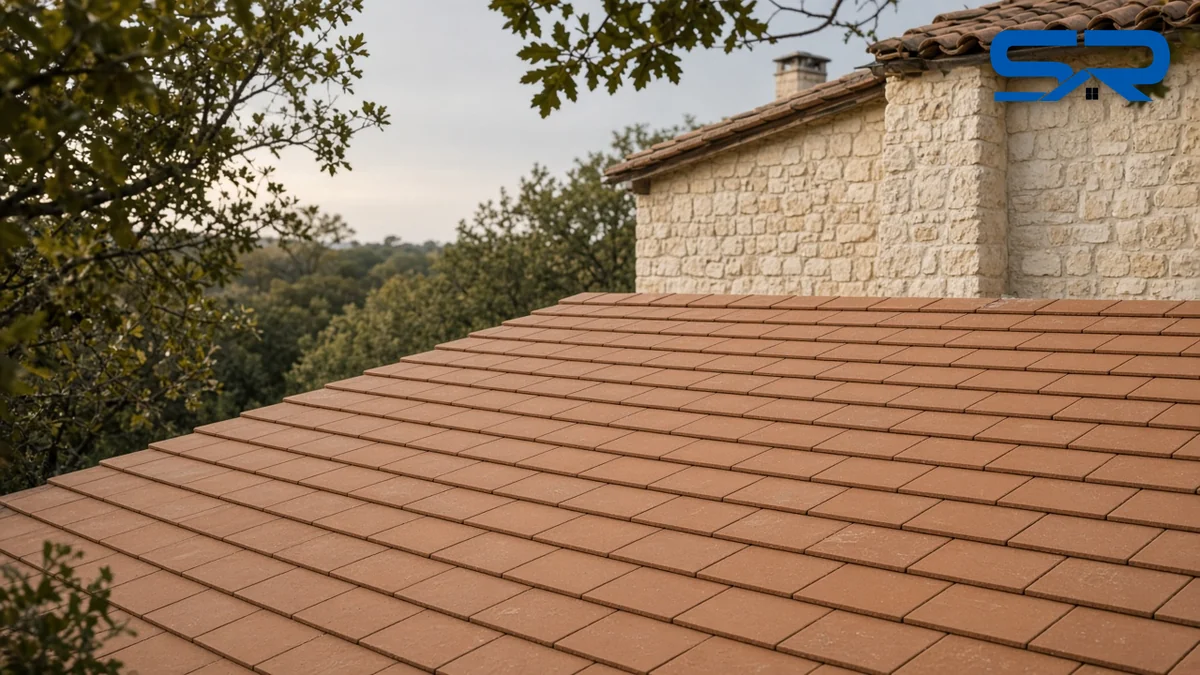
A clay tile roof on a Trophy Club or Westlake Mediterranean home can look nearly as good at 25 years as it did the day it went on. That’s the trap. The tile is fine; the roof under it is wearing out. At some point the patches stop holding, and the smart move is a planned reroof, done once, on your schedule instead of the next storm’s.
I’m Blake Snow. I’ve been roofing for 30 years, our crews have completed over $80 million in roofing projects, and tile is the work I like best. This post is about planning a full clay tile reroof: new underlayment, battens and flashings, with your good tile going back on and the worn tile replaced at the same time. If you have one leak and the rest of the roof is sound, read my post on tile leaks and lift-and-relay instead. If a storm just came through, start with the tile roof hail check.
The short version
- Clay usually outlives what’s under it. Plan the reroof around the underlayment, battens and flashings, not the tile.
- The code lets sound tile go back on. Cracked or broken tile can’t be reinstalled, and rusted or damaged flashings, vents and similar parts must be replaced (IRC R908.5).
- You can’t roof over tile. Code doesn’t allow a recover over existing clay or cement tile, so it’s always a tear-off down to the deck.
- Decide reuse vs. new clay with a test area, not a guess. Count breakage, check for spalling and confirm you can match before the order is placed.
- Put the original tile where it shows. Harvested and new matching tile can go on the back slopes.
- Fix everything under the tile while it’s open: deck, battens, valleys, wall flashings, chimney, skylights, vents and ventilation.
- Permits and HOA come first. Trophy Club requires a permit past 25 percent of the roof; Westlake requires one for any reroof, with an HOA letter.
Signs it’s time to plan a reroof, not another repair
| What you’re seeing | What it usually means |
|---|---|
| Leaks in two or more places, or a leak that comes back after a repair | The underlayment is failing across the roof, not in one spot |
| Felt that cracks or crumbles when a tile is lifted | The waterproof layer is at the end of its life |
| Tile slipping out of its courses on several slopes | Rusted nails, failed clips or rotted battens |
| Dark, soft or stained decking seen from the attic | Water has been getting through for a while |
| Rusted valley metal, pan flashings or pipe flashings | Metal parts that code says must be replaced at reroof |
| Ridge and hip mortar cracking and falling out | Old ridge details due to be rebuilt |
| A roof in the 20 to 30 year range that’s never had the underlayment replaced | You’re on borrowed time, even if nothing leaks yet |
A drone flight is a good first step: our drone inspection photographs every slope, valley and ridge without anyone stepping on tile. Then we lift tile in a few spots on each slope, because the underlayment is the part a drone can’t see.
What the code says about reusing clay tile
Westlake now builds to the 2024 International Residential Code with regional amendments (the town’s Building Codes page lists the 2024 codes adopted September 15, 2026). Trophy Club’s roofing article says the town’s currently adopted building codes apply to roof repair and replacement. The IRC rules that matter for a clay tile reroof:
- Reinstallation (R908.5). Existing slate, clay or cement tile may be reinstalled, but damaged, cracked or broken tile may not. Existing flashings, edgings, outlets, vents and similar parts must be replaced if they’re rusted, damaged or deteriorated.
- No recover over tile (R908.3.1.1 in the 2021 edition). A new roof can’t go over an existing slate, clay or cement tile roof. A tile reroof means tearing off down to the deck.
- Flashings rebuilt (R908.6). Flashings are reconstructed to the manufacturer’s installation instructions.
- Deck (R905.3.1). Tile goes over solid sheathing (wood structural panels or solid lumber), with limited exceptions for spaced lumber.
- Slope (R905.3.2). Clay and concrete tile need at least 2½:12. From 2½:12 up to 4:12, double underlayment is required.
- Fasteners (R905.3.6). Corrosion-resistant nails, not less than 11-gauge with a 5/16-inch head, long enough to penetrate the deck at least ¾ inch or go through it. Perimeter fastening areas cover three tile courses, but not less than 36 inches, at eaves, rakes, hips and ridges.
- Valleys (R905.3.8). Valley metal must extend at least 11 inches each way from the centerline with a 1-inch splash diverter rib, over an extra 36-inch underlayment strip on slopes of 3:12 and up.
The Tile Roofing Industry Alliance’s Concrete and Clay Roof Tile Installation Manual (March 2024, the installation guide its member manufacturers recognize) says the same thing in plain words for re-roofs: clean all foreign matter out of the interlocking areas, remove cracked or broken tile from the roof, and replace damaged, rusted or improper flashing. Your tile maker’s own instructions apply on top of that.
Reuse your clay, buy new clay, or split it?
This is the biggest decision in the job, and it should be made with tile in hand, not from the driveway.
| Situation | What I’d usually recommend |
|---|---|
| Most tile is sound, profile and color can be matched, underlayment is worn out | Reuse. Lift, stack and sort the tile; replace underlayment, battens and flashings; re-lay the sound tile; replace broken pieces with matching tile |
| Sound tile overall, but your profile or color is hard to find | Split. Original tile on the street-facing slopes; harvested or new close-match tile on the back |
| Lots of cracking, spalling (flaking faces) or tile that snaps when handled | New clay. Old tile can’t go back on if it’s cracked or broken, and a roof full of marginal tile will keep breaking |
| You’re changing the look: new color, new profile, or a different material | New tile or a new roof type, with HOA approval first |
| The “clay” roof turns out to be concrete tile | Same planning steps, but check the product: some concrete lines, such as Lifetile, are discontinued, so matching means salvage, harvesting or new tile |
How we decide. Before the full tear-off, we hand-lift a test area, count how many tiles crack coming off, and look at the tile faces and backs for spalling, fine cracks and worn lugs. That breakage rate drives the order for replacement tile. The National Park Service’s guidance on clay tile, Preservation Brief 30, recommends keeping as many original tiles as possible, and notes that when more than about 30 percent of the tiles are lost, broken or badly damaged, replacing them all with new matching tile may be necessary unless matching replacements can be found. It also warns that a tile with the same pattern name may have changed shape, size or thickness over the years, so it may not fit well enough to mix in where it shows.
Matching new clay to old. We identify the maker, profile (barrel, S-tile, flat or interlocking), size and color blend, then lay samples next to your weathered tile in daylight. Current clay lines from makers like Ludowici and others come in many profiles and blends, and matching is done by eye on your roof, not from a brochure. The TRI Alliance’s post-storm repair guide says replacement tile has to fit and interlock with the existing tile, and that when a shape is no longer made, tile can be harvested from inconspicuous, non-street-facing slopes for the visible ones. It also says new or harvested tile shouldn’t go over compromised underlayment, which is exactly why a reroof replaces it.
Keep your spares. Leftover tile in the garage or attic from the original job is the best match you’ll ever find.
What gets replaced under the tile
On a planned reroof, everything between the deck and the tile is new. Here’s what that means on a Trophy Club or Westlake home:
| Layer | What we do | Why it matters |
|---|---|---|
| Deck | Strip to the deck, set or pull protruding nails, replace soft, delaminated or rotted sheathing | Tile has to go over solid sheathing, and new fasteners need sound wood to hold |
| Underlayment | New underlayment for your slope: one lapped layer at 4:12 and steeper, two layers from 2½:12 to 4:12, or a self-adhered membrane where the tile maker and code allow | This is the actual waterproofing on a tile roof |
| Battens | New battens, nominal 1x2 or larger, with drainage gaps at the ends (TRI calls for ½ inch at batten ends) or shims, or raised and counter-batten systems | Battens hold the tile lugs, keep tile from slipping, and let water and air move under the tile |
| Valleys | New valley metal with the splash diverter rib, over an extra underlayment strip | Valleys carry the most water on the roof |
| Walls, chimneys, headwalls | New pan and step flashings, headwall flashing, counter-flashing into stucco, stone or brick | Where most tile leaks start |
| Pipes and vents | New deck and tile flashings, malleable flashings on medium and high profile tile | Old pipe flashings are a common leak source |
| Eaves | New drip edge and eave closure (bird stop or eave riser) | Keeps birds and pests out and lifts the first course to the right angle |
| Hips and ridges | Rebuilt to current methods with a ridge nailer and fastened caps | Old mortar-set ridges crack and let caps loosen |
Battens and drainage. The TRI manual describes battens nailed to the deck with corrosion-resistant fasteners, with gaps or shims so water can drain under them. A counter-batten system (vertical strips under the horizontal battens) adds space for air flow and moisture drainage, and the manual cautions that the underlayment must be protected when counter battens go on. Which batten system fits depends on your tile, slope and the maker’s instructions, so it should be spelled out in the bid.
Ventilation. The TRI manual points to the code: generally 1 square foot of net free vent area for every 150 square feet of attic, which codes generally let you reduce to 1:300 with a balanced system or a vapor retarder in some cases. A reroof is the cheapest time to fix attic ventilation, since the roof is already open.
Copper while it’s open. Many owners upgrade valleys, pans and flashings to copper during a tile reroof. See copper flashing, valleys and gutters on tile and copper roofing.
Low-slope porches, patios and bays: where tile shouldn’t go
Mediterranean homes often have a porch, loggia, bay or back patio roof flatter than the main roof. The IRC doesn’t allow tile below 2½:12, and the TRI manual treats tile under 3:12 as decorative, over a full membrane. On those areas I’d rather put standing seam metal: it’s made for low slopes, it looks right with clay tile and stucco, and a dark bronze or copper-tone panel ties into terracotta well.
We run our own roll formers, so panels are made to length for your roof, in 24 or 26 gauge, and metal lead time is typically 1 to 2 weeks, which fits inside a tile reroof schedule. See standing seam in Trophy Club and standing seam in Westlake.
How a clay tile reroof runs, step by step
- Inspect and document. Drone photos, lifted-tile checks on each slope, attic check, and a photo report.
- Identify the tile and line up matches. Maker, profile, color, and a source for replacement tile, confirmed before the start date.
- HOA approval and permit. Submittal with product sheets and samples where needed; we pull the permit.
- Test area. Hand-lift a section, count breakage, finalize the replacement tile order.
- Lift, sort and stage. Tile comes off by hand, gets sorted (field tile, cut pieces, hips, ridges, trim) and is stacked on the roof or on the ground. Loads are spread out, because the code requires the structure to carry the material and equipment loads during installation (R908.2).
- Tear off to the deck. Old underlayment, battens, nails and flashings come off; deck repairs get done and photographed.
- Dry-in. New underlayment goes down slope by slope so the house is never left open to weather.
- Flashings and battens. Valleys, walls, chimneys, skylights, pipes and eaves, then battens set to the tile’s spacing.
- Relay. Sound original tile goes back on, fastened to code and the maker’s instructions; broken tile is replaced with matching tile, with the best-looking tile on the street side.
- Hips, ridges and finish. Ridges and hips rebuilt and fastened; gutters checked and cleaned; final photos.
- Inspection and paperwork. Town inspection, final photo report and written warranties.
Permits and rules in Trophy Club and Westlake
Town of Trophy Club. Trophy Club has its own roofing article in the town code (Article 3.06). Section 3.06.003 says no one may replace more than 25 percent of the roof covering on any building without first getting a roof repair permit. Section 3.06.007 says the currently adopted building codes apply to roof repair and replacement, and where the article and the codes conflict, the article controls. The article’s shingle rule (architectural or laminated only) and wood shake limits don’t change a clay tile reroof, but they matter if you’re thinking of switching materials. The town’s permitting page lists the general application that covers re-roof permits, with residential permits filed through the online portal and contractor registration through the same portal. Some Trophy Club neighborhoods also have planned development zoning ordinances with their own standards, so we read yours before writing the scope.
Town of Westlake. The town’s permitting page says contractors must submit a permit for any reroof, residential or commercial, through MyGov, with a site plan of the location, the roofing material and an official HOA approval letter. A plan review fee is due at submittal.
I couldn’t find a Trophy Club or Westlake rule written specifically about reusing tile on a reroof, so we confirm the details with the town’s building staff for each job. We pull the permits either way.
HOA review
Westlake neighborhoods such as Vaquero, Glenwyck Farms and Entrada, and Trophy Club neighborhoods such as The Highlands at Trophy Club, have architectural review. Re-laying your own tile usually keeps the roof looking the same, but a new tile color or profile, mixing new tile with old, or adding standing seam on a porch almost always needs approval first. Rules vary by neighborhood, so ask yours. We can get you manufacturer product sheets and samples for the submittal.
If you’re changing the roof instead
A reroof is the one time you can change materials without paying for tear-off twice. If you’re done with tile, these are the options I’d look at on a Trophy Club or Westlake home:
| Roof | Look | Worth knowing |
|---|---|---|
| New clay tile | The same Mediterranean, Spanish or Tuscan look, in a fresh color blend | The house is already framed for tile weight; HOAs usually approve a matching style |
| Standing seam metal | Clean lines, from transitional to modern | 24 or 26 gauge, made on our own roll formers, typically 1 to 2 weeks lead time |
| Enviroshake | Cedar shake or slate look | Much lighter than tile; Enviroshake lists a UL 2218 Class 4 impact rating. See Enviroshake in Trophy Club and Enviroshake in Westlake |
| Tile main roof + standing seam accents | Classic on these homes | Tile where it fits, metal on the low-slope porches, bays and patios |
Weighing clay vs. concrete tile for a new custom build is a different decision; that post covers it.
Hail and timing
Northeast Tarrant and south Denton County get serious hail, and big hail breaks tile. My tile roof hail check has NOAA Storm Events records for both towns. If a recent storm broke tile, get it documented before the reroof starts: storm damage and age-related wear are different things, and our report keeps them separate. In Texas you generally have 1 year from the date of loss to file a claim; check your policy. Texas law requires you to pay your deductible, and a contractor may not waive, absorb or rebate it.
Spring storms also fill roofers’ calendars. Planning a reroof for late summer, fall or winter gives you time for HOA review, tile matching and permits without a leak forcing the schedule.
14 questions to ask before you sign a clay tile reroof
- Will you lift tile on every slope and show me photos of the underlayment, battens and deck?
- Will you do a test area to measure breakage before ordering replacement tile?
- What’s your plan for matching my tile, and where is it coming from?
- Which slopes get the original tile, and which get harvested or new tile?
- How will the tile be removed, sorted, stacked and protected, and where will it be staged?
- What underlayment are you using, how many layers, and why for my slope?
- Which batten system, and how does water drain under the battens?
- Is every valley, pan, headwall, chimney, skylight and pipe flashing new? In what metal?
- How are hips and ridges rebuilt and fastened?
- What fasteners are you using, and do they meet code and the tile maker’s instructions?
- How do you price deck repairs, and will you photograph them?
- Will you check and correct attic ventilation?
- Who pulls the permit, and who handles the HOA submittal?
- What are the manufacturer and workmanship warranties, in writing?
Nearby towns
We plan and install tile reroofs across northeast Tarrant and south Denton County, including Southlake, Roanoke, Keller and Colleyville. See tile roofing in Trophy Club, tile roofing in Westlake, tile roofing in Southlake, tile roofing in Roanoke and tile roofing in Colleyville, plus our tile repair and reset page.
Plan your clay tile reroof with us
Every roof is installed to manufacturer specs by certified installers. We’re certified with GAF, CertainTeed, Owens Corning, Atlas, Johns Manville, Carlisle, Tropical Roofing Products, Mule-Hide and Enviroshake, and many other roof manufacturers. Snow Roofing & Exteriors is fully insured, has offices in Bridgeport, Decatur and Rhome, is BBB A+ rated, and has 5.0 stars on Google at all three offices: Bridgeport, Decatur and Rhome. References are available on request. Our workmanship warranty runs from 10 years up to lifetime, depending on the job.
Call (817) 733-9228 or request a free estimate. We’ll fly the roof, lift tile where it counts, and give you a plan that tells you how much of your clay can go back on and what it takes to make the roof right for the next few decades.
Sources
- International Residential Code 2021, Chapter 9 (Texas, via UpCodes): R905.3 clay and concrete tile, R908 reroofing
- International Residential Code 2024, Chapter 9 (Texas, via UpCodes): R908.5 reinstallation of materials
- Tile Roofing Industry Alliance: Concrete and Clay Roof Tile Installation Manual (March 2024)
- Tile Roofing Industry Alliance: Post-storm considerations for repairing damaged concrete and clay roof tiles
- National Park Service: Preservation Brief 30, The Preservation and Repair of Historic Clay Tile Roofs
- Town of Trophy Club Code, Article 3.06 Roofing Requirements
- Town of Trophy Club: Permitting
- Town of Westlake: Permitting Process
- Town of Westlake: Building Codes
- NOAA NCEI: Storm Events Database