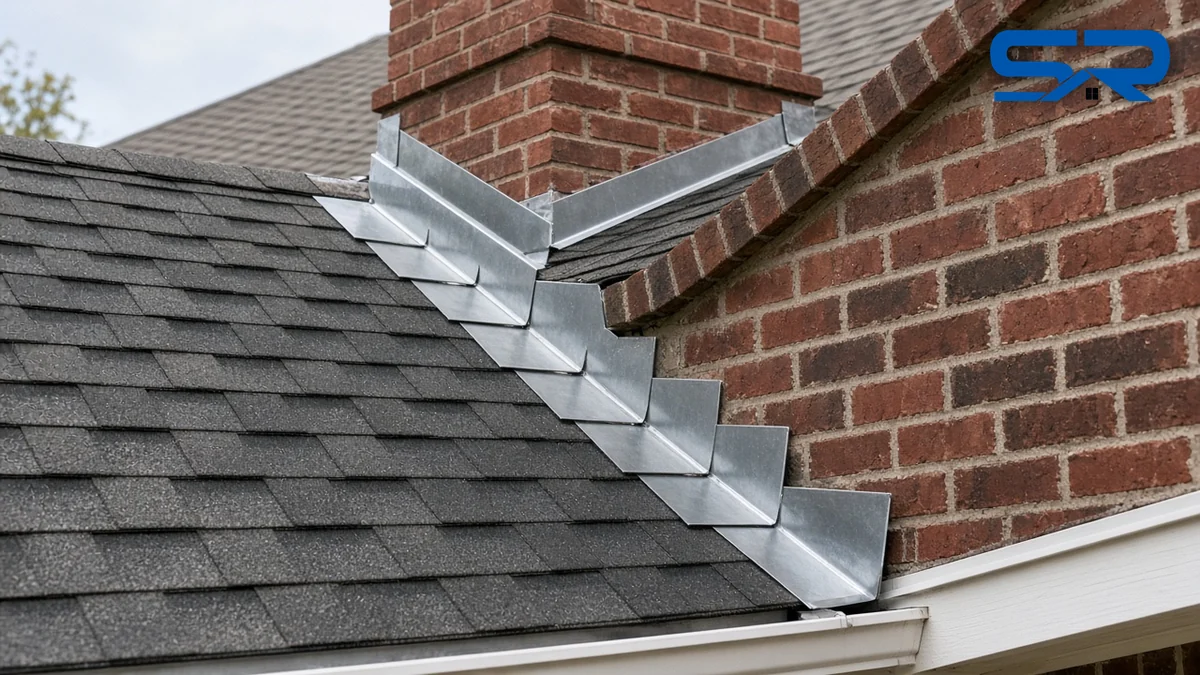
Chimney flashing leak repair: the four sides
Chimney flashing leak repair starts with the fact that a chimney is a hole in the roof with four different edges. The front (downslope) side gets an apron, or base flashing, that sheds water onto the shingles or panels below. Each side gets step flashing woven with the shingles. The top of those pieces is covered with counter flashing cut into the masonry. The back (upslope) side gets a back pan — a continuous base flashing — or, when the chimney is wide enough, a cricket (also called a saddle) that splits the water around the chimney instead of letting it pond against the brick.
The International Residential Code, Section R903.2.2, requires a cricket or saddle on the ridge side of any chimney or penetration more than 30 inches wide, measured perpendicular to the slope, covered in sheet metal or the same material as the roof. Section R1003.20 has a similar rule for masonry chimneys when the dimension parallel to the ridgeline is greater than 30 inches and the chimney does not intersect the ridge, and it includes a table for cricket height by roof slope. The National Roofing Contractors Association recommends a cricket in more cases than the code minimum: when the chimney is more than 24 inches wide, when the roof slope is 6-in-12 or steeper, or when a large volume of water is expected. We install a cricket whenever the code requires one, and we recommend one when the NRCA conditions apply, because a wide, steep North Texas roof can put a lot of water against a chimney on a storm day.
How chimney flashing fails
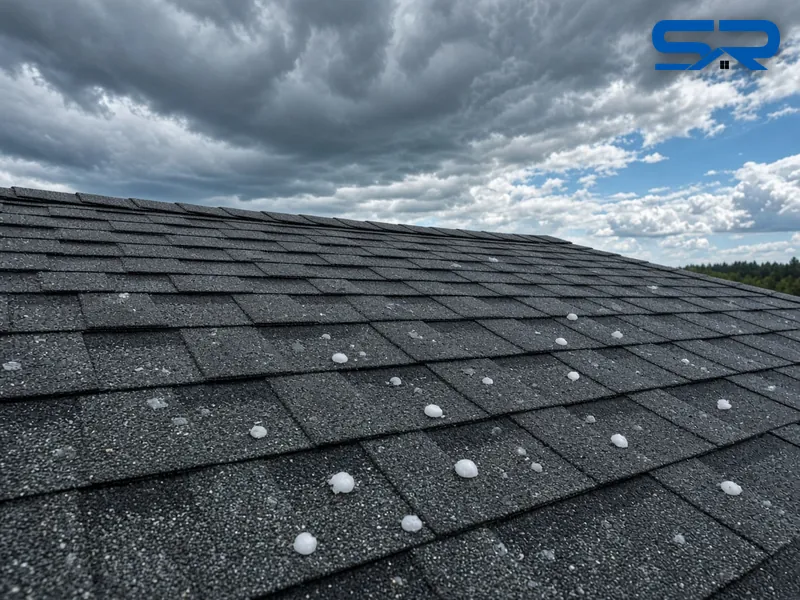
Leaks at a chimney are often blamed on "bad brick" or "the flue," when the actual path is a missing cricket, a reused step that no longer laps, counter flashing that was never cut into the mortar, or an apron that was nailed through the exposed face and sealed with caulk. Hail and wind can also open those joints. On a reroof, prying old metal out of the brick and bending it back in is a common shortcut, and it is a common reason the new roof still leaks at the same chimney.
What we do on every chimney flashing job
- We inspect and photograph all four sides, the high-side drainage, and the ceiling or attic stain, then put it in a free digital photo report.
- We install a new apron, new step flashing and new counter flashing cut into and sealed in the masonry, rather than reusing bent metal.
- We build a back pan or cricket on the high side when the code requires it or when the chimney would otherwise dam water.
- The cricket is flashed and counter-flashed the same way as the rest of the chimney, which is also what IRC R1003.20 calls for.
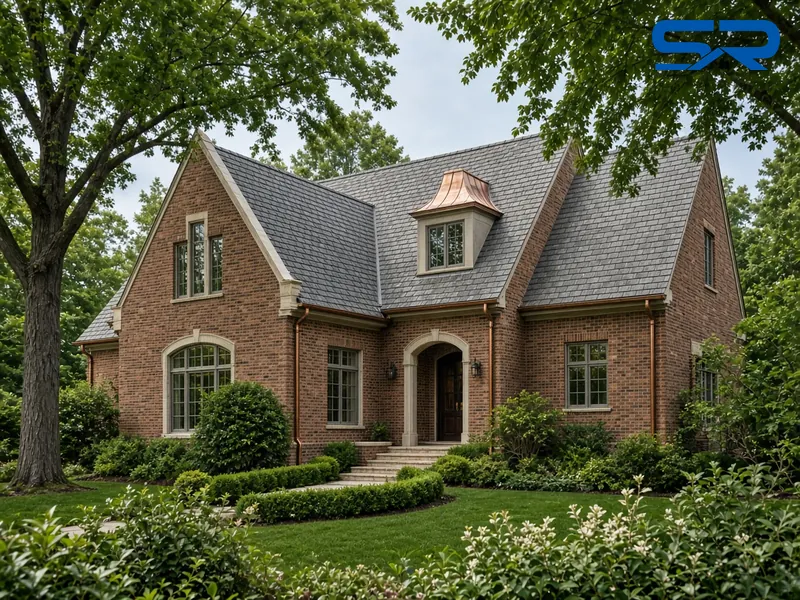
We're certified with GAF, CertainTeed, Owens Corning, Atlas, Johns Manville, Carlisle, Tropical Roofing Products, Mule-Hide and Enviroshake, and many other roof manufacturers. For copper caps, crickets and dormers on high-end roofs, see our note on copper chimney caps and crickets.
Chimney flashing on a metal roof
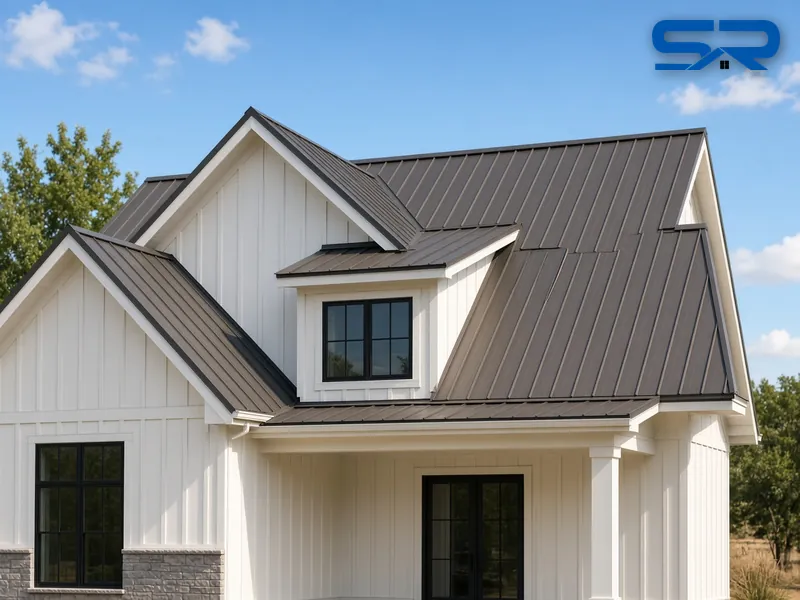
On standing seam, the apron, sidewall and headwall pieces are formed trim, often with Z-closures on the panels, and the masonry still gets cut-in counter flashing. We do not try to reuse shingle chimney flashing under metal panels. The trim is made to match the 24 or 26 gauge roof we form on our own roll formers.
Call (817) 733-9228 or request a free estimate for chimney flashing repair in Decatur, Fort Worth or the rest of our DFW area.
Residential warranty: a workmanship warranty from 10 years up to lifetime, depending on the job, with manufacturer warranties up to lifetime. Manufacturer coverage depends on the product and brand, and on the project qualifying for that manufacturer's program. We put the exact warranty for your roof in writing.
Certified, with 30 years installing every major roofing brand, a family roofing business going back 75 years, and over $80 million in completed roofing projects. 5.0 stars on Google at all three of our offices.
Request a free inspection or call (817) 733-9228. Small repairs are welcome too.