What is step flashing on a roof?
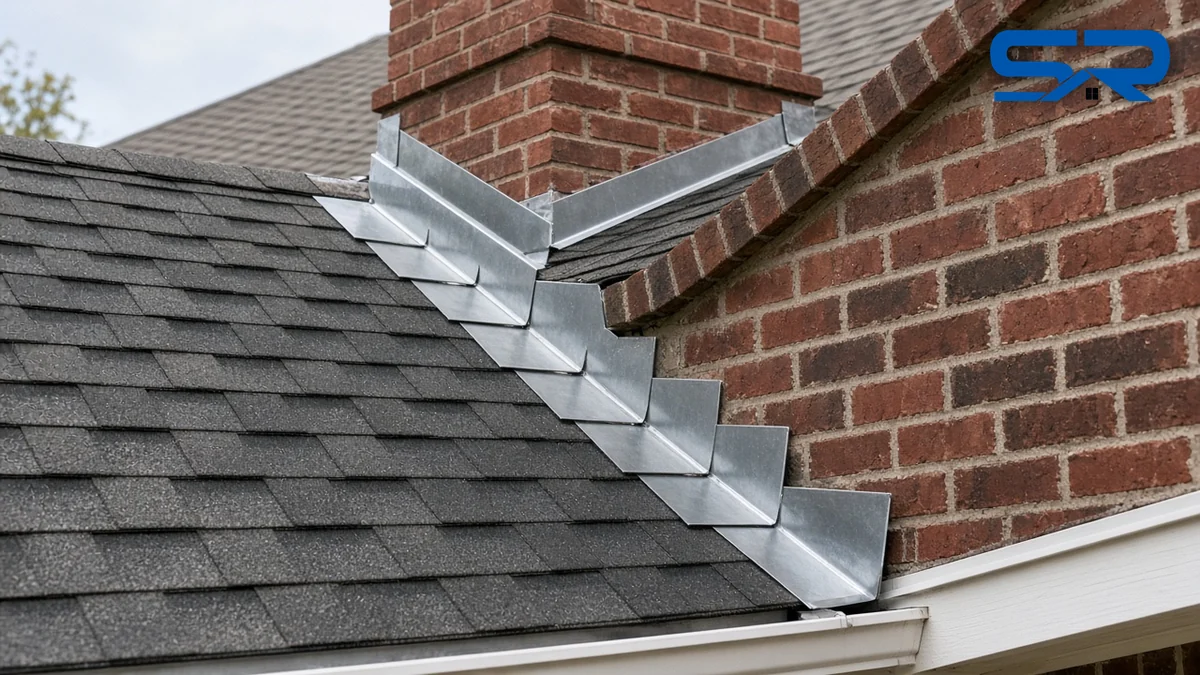
What is step flashing on a roof? It is a series of small, L-shaped metal pieces, each woven in with one course of shingles where the roof runs along a wall or the side of a chimney. The lower leg sits on the roof; the upper leg sits against the wall. The next shingle and the next piece of flashing overlap the one below, like shingles themselves, so water always hits metal or a shingle, never a raw joint. That is why the pieces are called "steps."
The International Residential Code, Section R905.2.8.3, says base flashing against a vertical sidewall must be continuous or step flashing, at least 4 inches high and 4 inches wide, and must direct water onto the roof or into a gutter. Where there is siding, the vertical leg has to run continuously under the siding. On masonry veneer, that base flashing is paired with counter flashing. GAF's TAB-R-121 says not to use a single long piece of "L" metal in place of step flashing at these transitions, because that is a common leak. The Asphalt Roofing Manufacturers Association commonly describes 5-inch by 5-inch pieces; we use pieces that meet or exceed the 4-inch code minimum and that match the shingle's exposure, as the manufacturer specifies.
Where step flashing goes
You'll find it along a side wall, a dormer wall, a second-story wall that a lower roof dies into, and up both sides of a masonry chimney. It does not replace the apron at the front of a chimney, and it does not replace a kick-out flashing at the bottom of the run. Those are separate pieces that work with the steps.
How step flashing fails when it is missed or reused
On a tear-off, old step flashing is often bent, shortened, or pulled out so the siding can stay in place. If that same metal is flattened and reused, the laps may no longer shed water, the length may not match the new shingle, and hidden rust or nail holes go right into the new roof. Sometimes a crew runs a continuous L-metal up the wall and caulks the top, which is the shortcut GAF warns against. Sometimes the steps were never there at all, and the only thing keeping the wall dry was a bead of caulk. North Texas sun and storms finish that job quickly.
What we do on every step flashing job
- We install new corrosion-resistant step flashing on shingle reroofs, sized to the new shingle, rather than reusing old or bent pieces.
- Each piece is woven with its shingle course, fastened on the roof leg only, and lapped so water is directed down and out.
- The wall leg tucks under the siding or house wrap, or is covered by counter flashing on masonry. We do not nail the cap flashing to the steps; they need to be able to move separately, which is also CertainTeed's instruction.
- At the bottom of a roof-to-wall run we add a kick-out so the last step does not dump water behind the siding or gutter end.
We're certified with GAF, CertainTeed, Owens Corning, Atlas, Johns Manville, Carlisle, Tropical Roofing Products, Mule-Hide and Enviroshake, and many other roof manufacturers.
Step flashing on a metal roof
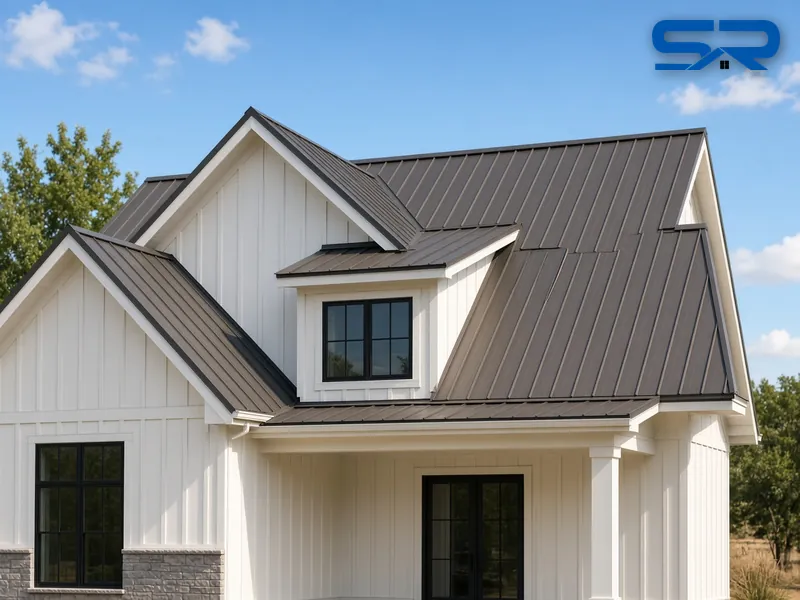
When we install a standing seam roof, we do not reuse shingle step flashing. Metal-roof manufacturers typically call for a continuous sidewall flashing over a sealed Z-closure on the panel, then siding or counter flashing over the wall leg. That continuous flashing is the metal-roof equivalent of the step system, built for panels instead of shingle courses. We form 24 or 26 gauge panels on our own roll formers and install the matching trim.
Need step flashing replaced in Decatur, Fort Worth or elsewhere in DFW? Call (817) 733-9228 or request a free estimate.
Residential warranty: a workmanship warranty from 10 years up to lifetime, depending on the job, with manufacturer warranties up to lifetime. Manufacturer coverage depends on the product and brand, and on the project qualifying for that manufacturer's program. We put the exact warranty for your roof in writing.
Certified, with 30 years installing every major roofing brand, a family roofing business going back 75 years, and over $80 million in completed roofing projects. 5.0 stars on Google at all three of our offices.
Request a free inspection or call (817) 733-9228. Small repairs are welcome too.