Duncanville Class 4 shingles: why they fit here
Duncanville is a railroad town that became a suburb. The Handbook of Texas says settlement began when Crawford Trees arrived from Illinois in 1845; in 1880 the Chicago, Texas and Mexican Central Railway reached the area and built Duncan Switch, named for a line foreman, and the first postmaster renamed it Duncanville in 1882. A fire in 1884 destroyed most of the town's commercial buildings. It stayed small, with just over 300 people in 1933, until residents incorporated a 225-acre city on August 2, 1947, partly to avoid annexation by Dallas. Then the suburbs arrived: about 5,000 people in 1962, about 13,000 in 1970, more than 31,000 by 1988 and 35,748 in 1990. Census counts put it at 40,705 in 2020, with about 38,900 estimated for 2025. So Duncanville is mostly built out, and most of its houses, brick ranches and two-stories from the 1960s through the 1980s, are on their second or third roof, often over original decking that is 40 to 60 years old.
NOAA's Storm Events Database lists 16 reports of hail 1.75 inches (golf-ball size) or larger within about 10 miles of the center of Duncanville from 2016 through the September 2026 update. None of those fell within about three miles of the center, but 8 reports of 1-inch hail did, including two on April 25, 2026 and one on May 24, 2026. The pattern is big hail on every side of the city and steady smaller hail across it. The biggest nearby:
- June 12, 2023: 4-inch hail near Cedar Hill, about five and a half miles south, with baseball-size hail near Cedar Hill State Park and tennis-ball-size hail west of Cedar Hill. NOAA's damage estimate for the 4-inch report alone is $1 million. Duncanville itself had 1-inch hail that day and four days earlier.
- April 25, 2026: hail up to 3 inches around Dallas Baptist University, about five miles north, where NOAA notes car windows were blown out, and 1-inch hail in north Duncanville the same day.
- April 9, 2021: 2-inch hail at Dallas Executive Airport, about four miles east, and in Cockrell Hill.
- June 1, 2025: 2-inch hail near Florence Hill, about five and a half miles northwest.
- April 26, 2017: hen-egg-size (2-inch) hail in Cedar Hill, about five miles south.
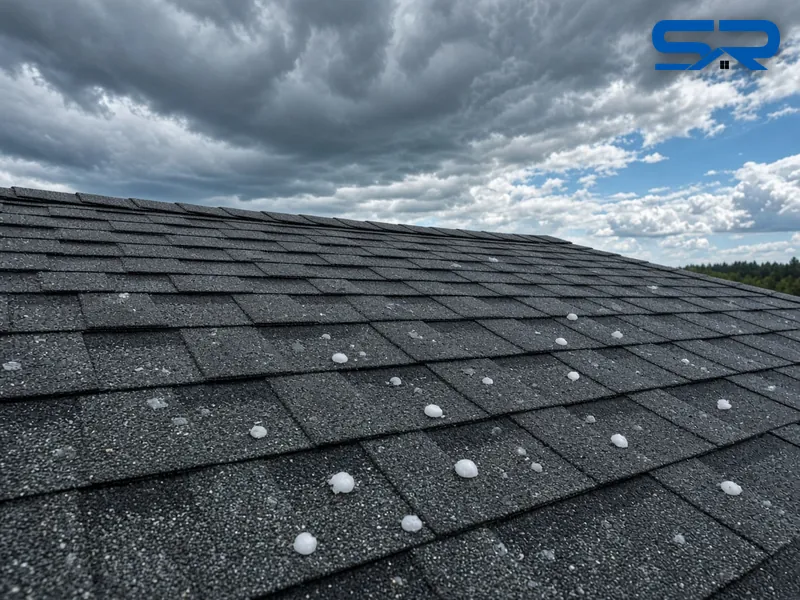
That pattern is exactly the one Class 4 shingles are built for. The 1-inch hail that falls across Duncanville every year or two is the hail that slowly knocks granules off ordinary shingles, bruises the mat and shortens the roof's life without always leaving a claim-sized mark. A UL 2218 Class 4 shingle is tested with a 2-inch steel ball, so it rides out those storms with far less wear. Hail like the 3- and 4-inch stones just north and south of the city can crack or bruise any shingle, Class 4 included, so we never sell the rating as hail-proof, but many insurers credit Class 4 for the storms it does handle.
Same-age roofs, same-week claims
In Duncanville, whole streets went up in the 1960s, ’70s and ’80s, when Duncanville grew from about 5,000 people in 1962 to 35,748 by 1990. That means the roofs on a block are usually the same age, the same kind of shingle and the same builder ventilation, and when a storm comes through they tend to fail together. Owners who have replaced a roof after hail once or twice are the ones who ask us about Class 4: a shingle that has passed the UL 2218 test with 2-inch steel balls, usually earns the largest insurance credit a company offers, and still looks like the rest of the street. We never sell it as hail-proof. What it does is ride out far more of the 1-inch to 2-inch storms that make up most of the reports near Duncanville.
Class 4 vs. Class 3 in plain English
| Class 3 | Class 4 | |
|---|---|---|
| UL 2218 test | Survived 1.75-inch steel balls | Survived 2-inch steel balls, the highest rating |
| Insurance credit in Texas | Some insurers credit it | Usually the largest credit insurers offer, when they offer one |
| Looks | Same architectural and designer styles; you can't tell from the street | |
| Our minimum | Every shingle roof we install is Class 3 or better | |
The insurance credit, honestly
Texas insurers must offer a premium credit for UL 2218 impact-rated roofs, but each company sets its own amount, and Class 4 earns the largest. We can't promise a discount; ask your insurer for their figure in writing. After a qualifying install we fill out TDI Form PC068 for you. Call your agent before you choose and ask three things: whether they credit UL 2218 roofs, the dollar amount for Class 3 and for Class 4, and whether that credit applies to your current policy form. Then compare the yearly credit with the price difference we quote you in writing. The full rules are in our Texas impact-resistant roof insurance guide.
Class 4 in the styles Duncanville neighborhoods approve
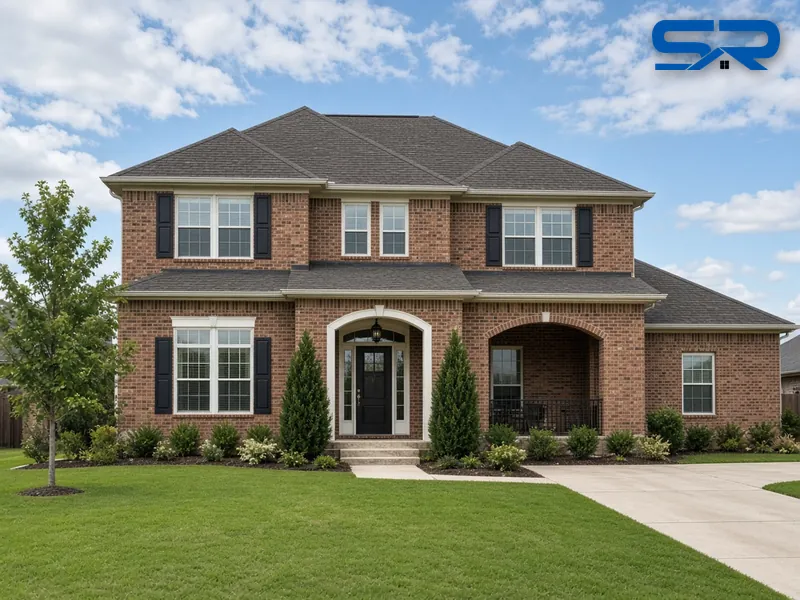
Class 4 doesn't mean a plain shingle. Impact-rated lines come in standard architectural profiles and in designer slate- and shake-look styles. On 1960s and 1970s brick ranches, a weathered wood or charcoal architectural Class 4 keeps the long roofline quiet; on 1980s two-stories, a designer slate- or shake-look Class 4 adds depth from the street. When there's an HOA, we bring the packet: manufacturer sheet, color sample, impact rating and a photo of the product installed. Our guide to the best Class 4 shingles for Texas compares the lines we install, including the Atlas StormMaster family, and our HOA compliant roof replacement guide walks through approval step by step.
City of Duncanville roof permit rules
Duncanville spells it out. The City's Permit & Inspection Services page lists the projects that need a permit, and "Shingle replacement" and "Re-deck" are both on it. From the City's own pages:
- Registered on the City portal. Per the Building Inspections page, a contractor registers through the City's online portal, gets a login, and applies for the permit there. The City says it is moving to new permitting software starting December 1 and asks everyone to set up a new account, so we handle that on our end.
- Inspected before it's done. Once a permit is issued, one or more inspections are required before the work counts as complete and in compliance with the applicable codes.
- Built to the 2021 codes. Duncanville adopted the 2021 International Residential Code, Building Code and Energy Conservation Code (with the 2023 National Electrical Code), signed October 23, 2025.
- Good for six months. A permit is valid for six months from the day it is issued; an extension can be requested from the Building Official.
- The fee is the City's, not ours. The Master Fee Schedule effective October 1, 2026 lists a Residential re-roof at $150, including decking. Commercial roofs are priced on the City's commercial fee table.
The City also points out that homeowners' insurance may not pay for damage caused by work done without permits and inspections, and that work without a required permit may have to be removed. It reminds owners to check with their HOA, if they have one, for deed restrictions. Questions go to Permit & Inspection Services at 972-780-5000.
For a Class 4 roof on an older house, the decking line in that fee schedule matters. We tear off every layer, inspect every sheet, and replace soft or split decking (photographed and priced per sheet in writing first), because a Class 4 shingle nailed into tired decking won't hold its wind rating. The exact Class 4 shingle, underlayment and accessories go into the permit scope, and we keep the TDI Form PC068 with your permit records.
Repair or replace after a Duncanville storm?
Duncanville lists shingle replacement on its permit list, so even a partial replacement isn't paperwork-free. If the damage is limited to a slope or two, a repair can still make sense, and we'll tell you honestly whether today's shingles will match a roof that is 15 or 20 years old, because many original colors and lines are discontinued. If the roof is near the end of its life, or the damage runs across most slopes, replacing it with Class 4 usually costs little more than patching it again, and it resets the clock with a rating many insurers credit. On a claim, your adjuster's scope decides what the policy pays; we show you both options in writing so the upgrade decision is yours.
Wind, too
Class 4 is an impact rating, not a wind rating. Dallas Executive Airport, a few miles east, measured 61 mph and 60 mph gusts in 2019 and 2024, and NOAA lists roof damage to multiple homes in Cedar Hill's Stone Hill neighborhood, about five miles south, on March 4, 2025. We install the manufacturer's starter strip, nailing pattern and hip and ridge so the wind warranty applies, and we pay extra attention to the eaves and rakes.
Installing a Class 4 roof so the rating means something
- Installed to manufacturer specs by certified installers, with the nailing pattern, starter, underlayment and hip and ridge the manufacturer requires, so the product warranty applies.
- Matching accessories: impact-rated hip and ridge where the line offers it, and metal vents and flashings that won't crack like plastic.
- Decking and ventilation checked and corrected, because a Class 4 shingle on a soft deck or over a hot attic won't live up to its label.
- TDI Form PC068 completed after a qualifying install, with the product information your insurer needs.
When Class 4 shingles aren't the best answer
On some homes another roof makes more sense, and we'll say so:
- Owners who want the longest service life: standing seam in 24 or 26 gauge from our own roll formers, with metal lead times typically 1 to 2 weeks. Compare in metal vs. Class 4 shingles.
- Tile, slate or shake already on the house: matching it, or moving to synthetic slate or shake, may suit the house and HOA better.
- No insurance credit from your company: a Class 3 shingle (our minimum on every roof) can be the smarter buy.
Who installs Class 4 shingles in Duncanville?
Snow Roofing & Exteriors does. Facts you can check:
- 75 years as a family roofing business, and 30 years in the trade for owner Blake Snow.
- Over $80 million in completed roofing projects. 5.0 stars on Google at all three offices: Bridgeport, Decatur and Rhome. BBB A+ rated, fully insured, references available on request.
- Every shingle roof we install is Class 3 or better, with a workmanship warranty from 10 years up to lifetime, depending on the job.
- Our own crew, about 54 road miles (roughly an hour and 10 minutes) from Duncanville with our Rhome-area team. Every inspection comes with a free digital photo report, so you see what we see.
We're certified with GAF, CertainTeed, Owens Corning, Atlas, Johns Manville, Carlisle, Tropical Roofing Products, Mule-Hide and Enviroshake, and many other roof manufacturers. After a storm, see storm damage and roof replacement in Duncanville. More in Duncanville: our Duncanville roofing page, metal roofing in Duncanville and standing seam in Duncanville.
More Class 4 pages nearby: Cedar Hill, Grand Prairie, Mansfield, Arlington, Euless and Bedford.
Product names, ratings and features are as published by the manufacturer and can change. We confirm the current rating and warranty of the exact product before we order it.
Residential warranty: a workmanship warranty from 10 years up to lifetime, depending on the job, with manufacturer warranties up to lifetime. Manufacturer coverage depends on the product and brand, and on the project qualifying for that manufacturer's program. We put the exact warranty for your roof in writing.
Certified, with 30 years installing every major roofing brand, a family roofing business going back 75 years, and over $80 million in completed roofing projects. 5.0 stars on Google at all three of our offices.
Request a free inspection or call (817) 733-9228. Small repairs are welcome too.