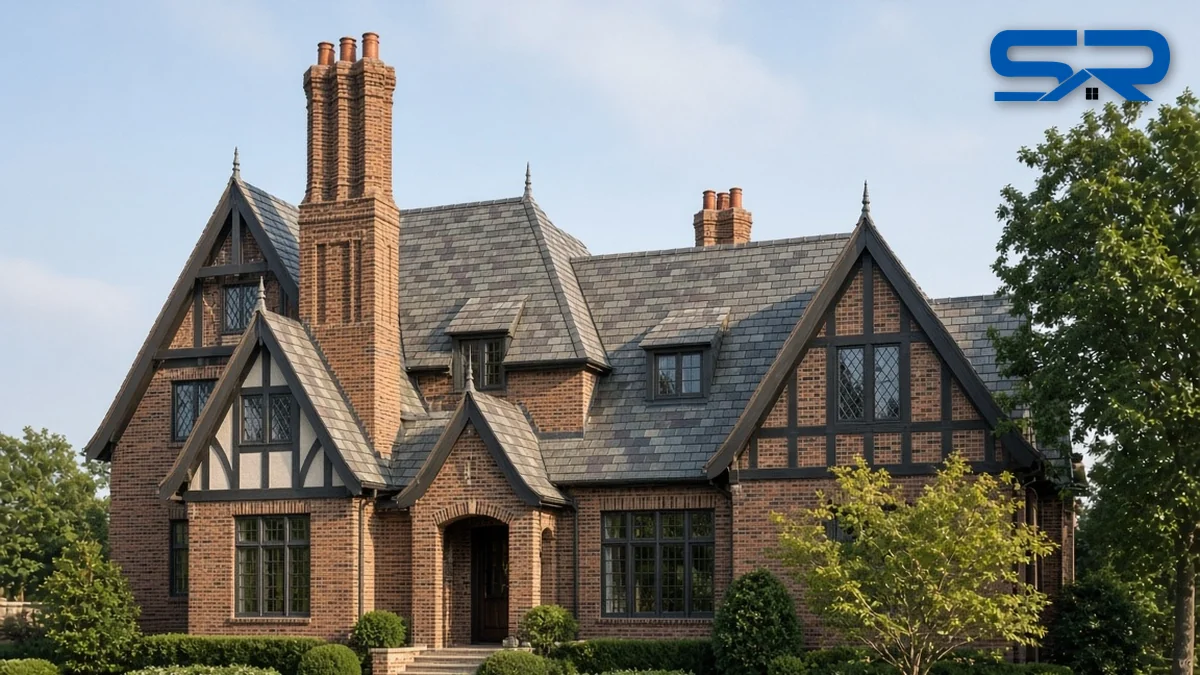
Historic slate reroofs in Highland Park and University Park are some of the most rewarding jobs in North Texas, and some of the easiest to get wrong. Many of these homes were built in the 1920s and 1930s, with Tudor, Georgian and French-inspired rooflines that depend on the slate for their character. Get the slate, the flashing or the job-site plan wrong, and you lose something that took a century to earn.
I’m Blake Snow. I’ve been roofing for 30 years, I’m the third generation in a family business that goes back 75 years, and our crews have completed over $80 million in roofing projects. We install and repair natural slate across Highland Park, University Park and the rest of Dallas. Here’s how I plan a historic slate reroof in the Park Cities, from who reviews it to where the dumpster goes.
The short version
- There’s no town historic review board in Highland Park or University Park, but you still need a permit, and some houses carry state or tax-credit obligations.
- Repair before you replace. Many old slate roofs fail because of rusted nails and worn flashing, not worn-out stone.
- Like-kind slate matches size, shape, color, texture, exposure and coursing. Document all six before anything comes off.
- Salvage sound slate and keep it for the sections that stay and for future repairs.
- Copper flashing goes with a slate roof meant to last generations.
- Staging is half the job on a tight Park Cities lot: dumpster placement, deliveries, neighbors, and closing up the roof every day.
Who actually reviews a historic slate reroof in the Park Cities?
Many roofers talk about “historic review” in the Park Cities. Here’s what the official sources say:
| Who | Do they review a slate reroof? | Source |
|---|---|---|
| Town of Highland Park | No preservation review. The town says it “does not have local ordinances, districts, etc. imposing restrictions or requirements on property owners.” Permits are still required for repairs and remodeling. | Town of Highland Park FAQ, Community Development |
| City of University Park | No historic preservation ordinance, as reported by People Newspapers. Roofing requires a permit. | University Park new resident packet |
| Preservation Park Cities | Recognition only. It keeps the inventory of designated homes and awards plaques. It has no legal review power. | Preservation Park Cities |
| Texas Historical Commission | Only if the house is a Recorded Texas Historic Landmark. Then 60 days’ written notice is required before changes to its exterior integrity. | THC RTHL review |
| National Park Service | National Register listing by itself places no restrictions on a non-federal owner, unless the project involves federal assistance. | NPS National Register FAQ |
| City of Dallas Landmark Commission | Only for homes inside the City of Dallas in a Landmark District or individually listed as a Dallas Landmark. A Certificate of Appropriateness is required before exterior work. | Dallas Landmark Review Process |
So for most Highland Park and University Park homes, the reviewers are the building department and you. A few situations change that:
- Recorded Texas Historic Landmark. If your house has a Texas historical medallion as an RTHL, notify the THC in writing at least 60 days before work that could change its historic or architectural integrity, with drawings and photos. Normal maintenance and repair is exempt. Like-kind slate makes for a simple review. A switch to a different-looking material may not.
- Tax credits or grants. If you’re using federal or state rehabilitation tax credits or a preservation grant, the roof has to meet the Secretary of the Interior’s Standards. Ask your preservation consultant before you choose a material.
- Deed restrictions or easements. Some owners have added preservation deed restrictions or easements. Check your title documents.
- Next door in Dallas. A home in a Dallas Landmark District goes through the city’s Certificate of Appropriateness process. Dallas lists replacing deteriorated features like roofing as routine maintenance that staff can approve. Bigger changes go to the Landmark Commission.
No review board doesn’t mean anything goes. The roof is often the single most visible feature of a 1920s Park Cities house. Swapping natural slate for something that doesn’t look like slate is legal in both towns, but it changes the house for good. If the weight or cost of natural slate is the issue, read synthetic vs. real slate or our Highland Park synthetic slate page first.
Repair, reslate or replace?
The National Park Service’s Preservation Brief 29 on historic slate roofs is clear: slate roofs should be repaired rather than replaced whenever possible, and installed properly they can last 60 to 125 years or longer. Many old Park Cities slate roofs that leak have sound stone held on by rusting nails, with worn flashing at chimneys, valleys and dormers.
I cover the decision in detail in natural slate roof repair vs. replacement. In short:
| What we find | What I usually recommend |
|---|---|
| Sound slate, a few broken pieces | Repair: replace the broken slates with matching slate |
| Sound slate, failed flashing | Reflash: lift slate at chimneys, valleys and walls, install new copper flashing, relay the slate |
| Sound slate, failed nails or underlayment | Strip, salvage and relay: take the slate off, sort and sound it, then relay it with new nails and underlayment, adding matched slate to make up the loss |
| Slate flaking, soft or delaminating across the roof | Replace with new like-kind slate, keeping sound salvaged pieces for repairs |
See our slate repair page for the repair side.
Like-kind materials: matching the original slate
Preservation Brief 29 says size, shape, color, texture, exposure and coursing are among the most important characteristics to document and match. Here’s what I record before anything comes off:
| Characteristic | What we document | Why it matters |
|---|---|---|
| Size | Length and width of the field slates, and any graduated sizes | Graduated roofs step from larger slate at the eave to smaller at the ridge |
| Shape | Square-cut, clipped corners, fishscale or other patterns | Patterned bands are part of the design |
| Color | Original color and weathered color, by section | Some slates weather to a different shade over time |
| Texture and thickness | Standard, textural or heavy slate | Thick, rough slate reads very differently from thin, even slate |
| Exposure | Inches of each slate showing | Changing exposure changes the look of every course |
| Coursing | Straight, staggered or random-width courses | Random widths and mixed colors are hard to replicate without planning |
The brief also points to old photos, shadow lines and nail-hole patterns on the deck, and leftover pieces in the eaves as clues to the original roof. On a Park Cities house, old photos from the owner, the family or a preservation inventory can help.
Then we match the stone. The brief notes that mottled gray Vermont slate is the closest match available today for old Pennsylvania ribbon slate, and that imported slate often doesn’t match the colors and textures of U.S. slate. That’s why I bring samples to the house and compare them in daylight against the actual roof, not a catalog. Learn more about the stone on our slate quarries and brands, Vermont and New York slate and Pennsylvania slate pages, and about specifying grade and thickness in slate grade, thickness and ASTM C406.
Salvaging and sorting the old slate
When nails or flashing caused the failure, much of the slate can usually be saved. Preservation Brief 29 says each salvaged slate must be sounded for cracks, faults and weathering. A sound slate gives a clear ring when tapped. A dull thud means a hidden crack or soft stone. We sort salvaged slate by size and color on pallets, keep the best pieces for the most visible slopes, and set aside extras for future repairs.
Flashing and fastening
A slate roof is only as good as its metal. On historic slate I use copper for valleys, step and counterflashing, chimney flashing, crickets and gutters, so the metal lasts about as long as the stone. More in copper flashing for valleys and gutters on slate and tile and our copper roofing page. Fastening (copper nails, hooks, nail gauge and length) is its own topic, covered in slate hooks vs. copper nails in Highland Park.
The deck and framing
Preservation Brief 29 recommends replacing rotted sheathing as the slate comes off and checking the roof framing for deflection, cracking or twisting. If we find structural problems, we bring in a structural engineer experienced with older buildings. The brief also says to finish other roof-level work, like chimney repointing, before the new slate goes on. That’s the right time to fix a leaning chimney or add a cricket behind a wide one.
Staging a slate reroof on a tight Park Cities lot
Park Cities lots are tight, with mature trees, alleys and neighbors close by. Both towns have rules for job sites:
- Working hours. Highland Park allows construction Monday through Saturday, 7 a.m. to 6 p.m., with no work on Sundays or listed holidays, per its Community Development page. University Park’s job site rules list the same hours.
- Dumpsters. Highland Park requires construction waste haulers to be franchised with the town, per its Forms and Applications page. University Park’s job site rules also call for franchised dumpsters.
- Deliveries and parking. University Park’s rules address blocking lanes, rutting the parkway, mud on the pavement, and blocking alleys and driveways, plus worker parking.
- Neighbors. University Park’s rules call for notifying neighbors before work starts.
Here’s how we stage a historic slate reroof:
- Walk the site with you before we bid: where the slate pallets, dumpster and lift can go, and which trees, beds and hardscape need protection.
- Protect the house and grounds with tarps, plywood over walks and beds, and catch netting where slate comes down near windows.
- Strip in sections. Preservation Brief 29 recommends stripping in sections and installing underlayment as you go, so the whole roof is never open to the weather. We close up every section before we leave each day.
- Lower slate, don’t throw it. Salvageable slate comes down by hand or lift to be sorted, not down a chute.
- Keep the alley open. Deliveries are timed so trucks don’t block neighbors.
- Clean up daily with magnets for nails and a walk of the yard, beds and street.
Hail and Park Cities slate
Natural slate can crack in hail and under foot traffic. NOAA lists 10 reports of hail 1.75 inches or larger within about 10 miles of Highland Park from 2016 through September 2026, the largest 2.5-inch hail on June 2, 2017, according to its Storm Events Database. After a storm, we inspect slate from ladders and roof hooks, not by walking across it, and give you a digital photo report. If you file a claim, Texas generally gives you 1 year from the date of loss; check your policy. Our storm damage page explains how inspections and claims work.
Historic slate reroof checklist
Before you sign, ask these questions:
- Can my roof be repaired or reflashed instead of replaced?
- Is my house a Recorded Texas Historic Landmark, or under tax credits, a grant, an easement or deed restrictions?
- Will you document size, shape, color, texture, exposure and coursing before tear-off?
- Which quarry and color are you proposing, and can I see samples against my roof?
- How much of my old slate will you salvage, and where will you store the extras?
- Will the flashing be copper, and which details are being replaced?
- What nails or hooks will you use?
- How will you check the deck and framing?
- Will the chimneys be repointed before the slate goes back on?
- Who pulls the permit, and are you registered with the town or city?
- Where will the dumpster, slate pallets and lift go, and how will you protect my trees and beds?
- How will you close up the roof every night?
- What’s the written schedule?
- What’s the workmanship warranty, in writing?
Areas we serve
We repair and install natural slate in Highland Park, University Park, Preston Hollow and across Dallas. We also work on clay tile in Highland Park and University Park, and on the complex rooflines these homes are known for. See slate, copper turrets and mansards.
Let’s look at your slate roof
We’re certified with GAF, CertainTeed, Owens Corning, Atlas, Johns Manville, Carlisle, Tropical Roofing Products, Mule-Hide and Enviroshake, and many other roof manufacturers. Snow Roofing & Exteriors is fully insured, has offices in Bridgeport, Decatur and Rhome, is BBB A+ rated, and has 5.0 stars on Google at all three offices: Bridgeport, Decatur and Rhome. References are available on request. Our workmanship warranty runs from 10 years up to lifetime, depending on the job.
Call (817) 733-9228 or request an estimate. I’ll walk the roof with you and give you a free digital photo report and a written plan for repairing, reslating or replacing your slate with like-kind stone.