
How much does a metal roof cost in Fort Worth? That’s the first question I get on almost every metal estimate in Tarrant County, and the honest answer is that it depends on seven things you can actually see on your own roof. Below I’ll walk through each one in plain words, so when a bid lands on your kitchen table you’ll know exactly what you’re paying for.
I’m Blake Snow. I’ve been roofing for 30 years, I’m the third generation in a family business that goes back 75 years, and our Rhome office sits just north of Fort Worth on US 287. We form our own standing seam and R-panel on our own roll formers, and our own crew installs them.
You won’t find a dollar-per-square number on this page. That’s on purpose. A number that fits every house fits none of them, and I’d rather show you what moves the price, then measure your roof and put a real figure in writing. If you want the material side (gauge, seam type, paint system), our standing seam cost factors page covers that. This post is the Fort Worth house side: the roof itself.
The short answer
- Seven things set the price: roof size, pitch, access and stories, tear-off, trim, valleys, and penetrations.
- Your part of town doesn’t really matter. Where you are in Fort Worth doesn’t really change the price.
- Roof shape matters a lot. A hip roof has many more valleys than a gable roof, and that adds cost.
- Whole roofs go by the square; small jobs can go by the sheet. Accent metal is priced its own way.
- Ventilation is usually included, because a roof needs it to last.
- Every metal roof we install is 24 or 26 gauge, with a lead time of typically 1 to 2 weeks.
Metal roof cost in Fort Worth: the 7 things that set your price
1. Roof size
Roofs are measured in squares. One square is 100 square feet of roof surface, not floor space. A one-story house with big overhangs and a covered patio can have more roof than a two-story house with a smaller footprint. Material scales with the squares, so this is the biggest single number on any estimate. We measure every plane, including porches, patio covers and the garage, so nothing gets “found” later.
2. Pitch
Pitch is how steep the roof is, written as rise over run. A 6/12 roof climbs 6 inches for every 12 inches across. Most houses I roof around Fort Worth run between 6/12 and 8/12. Inside that range the crew can walk the roof and work at a normal pace. Steeper than that, the work slows down, the crew needs more safety setup, and the price goes up with it.
3. Access and number of stories
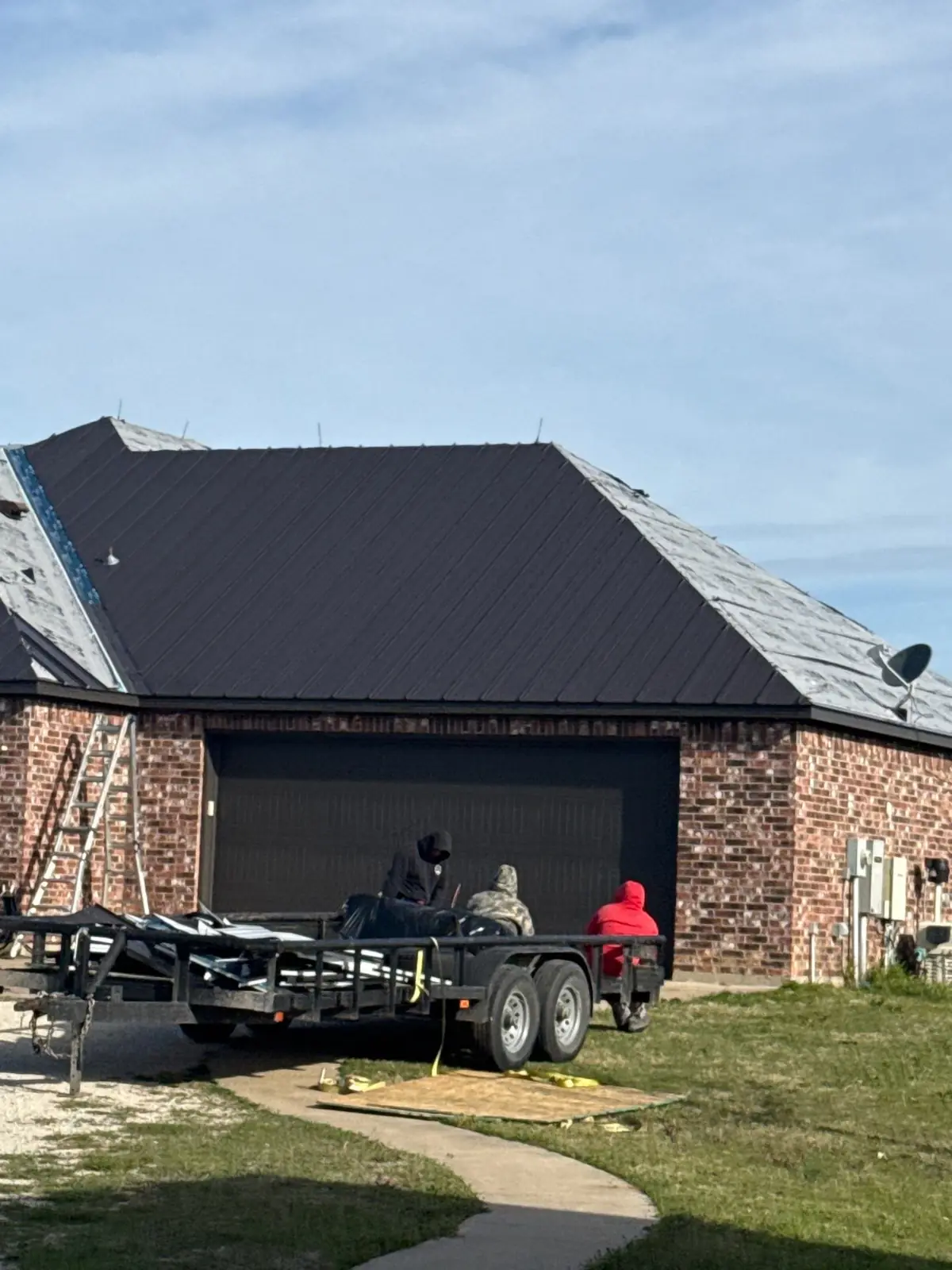
Here’s something most cost articles skip: on most Fort Worth houses, access is easy. We back a trailer up to the house and the tear-off goes straight into it. What makes access harder isn’t your street or your neighborhood. It’s pitch and the number of stories. A steep two-story roof means more time getting old material down and new panels up safely than a 6/12 single-story ranch, so it costs more to do right.
4. Tear-off
Most of our metal jobs are tear-offs, not new construction. The old shingles come off down to the deck, the debris goes in the trailer, and we look at the decking with the roof open. Any rotted or soft wood gets photographed and shown to you before it’s replaced. Tearing off lets the clips and fasteners go into solid wood, which is how a metal roof is meant to be held down. If you’re wondering about going over shingles instead, read metal over shingles first.
5. Trim
On a typical house, trim generally means fascia and drip edge: the metal that finishes the edges where the roof meets the eaves and rakes. Ridge, hip and wall flashings are formed to match the panels. Trim is where a lot of cheap bids cut corners, and edges are exactly where wind starts peeling a roof apart, so it’s worth asking any roofer what trim is included and whether it’s formed in the panel color.
6. Valleys (your roof’s shape)
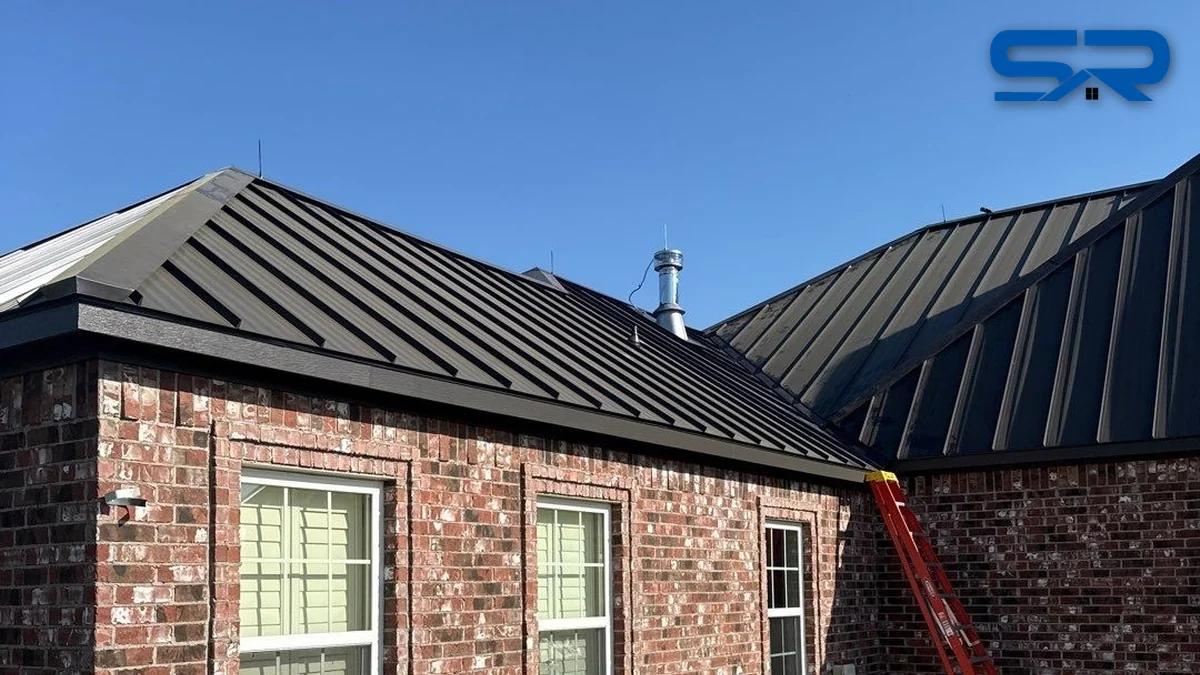
This is the factor that surprises people most. Two houses the same size can price very differently because of shape. Hip roofs have many more valleys than gable roofs. Every valley and hip means panels cut at an angle, extra trim, and slower, careful work so water has a clean path off the roof. A simple gable is the lowest cost per square. A cut-up hip roof with several wings, like the one in the photo at the top of this page, costs more per square.
Quick way to check your own house: stand in the yard and count the places where two roof slopes meet in a “V” that carries water down. Those are valleys. The more you count, the more labor and trim the job takes.
7. Penetrations
Anything that comes through the roof has to be flashed so it never leaks. On Fort Worth houses that’s usually:
- Bathroom plumbing jacks (vent pipes)
- Dryer vents
- HVAC stacks
- Fireplaces and chimneys
Each one is custom flashing work on a metal roof. A house with three bathrooms, a gas fireplace and two HVAC systems has a lot more of it than a small ranch with one bath. For how we flash each one, see metal roof flashing details.
What doesn’t really change the price
Where you live in Fort Worth. I get asked whether a house in Westover Hills costs more than one in Saginaw or Crowley. Not really. The roof’s size, pitch, shape and penetrations decide the price, not the zip code. What can matter is the paperwork: if a house sits in a Fort Worth historic district, roof changes need the district’s approval first, and the city requires a permit when decking or other structural wood gets replaced. We check each job with the city and pull the permit when one is required. Our Fort Worth metal roofs for homes post covers the city rules in more detail.
By the square, by the sheet, or accent pricing
How a metal job is priced depends on its size:
- Full roofs are usually priced by the square.
- Smaller jobs, like a shop lean-to or a small patio cover, can be priced by the sheet.
- Accent metal, like standing seam eyebrows over windows, a bay, or the porch on a shingle house, is priced differently from a full metal roof. There’s more trim and detail per square foot. See standing seam accents on porches, bays and entries.
Panel type matters too. Standing seam hides its fasteners and usually costs more than R-panel or PBR, which have exposed screws that need checking over the years. On a house you plan to keep, I usually recommend standing seam. On a shop or barn, R-panel is an honest, good roof.
What’s usually included that people forget to compare
Attic ventilation. It’s usually included in our metal jobs, because a roof needs proper ventilation to last. Heat and moisture trapped in a Texas attic shorten the life of the decking and underlayment under any roof. The International Residential Code (section R806) sets minimum attic ventilation for vented attics, and we make sure the intake and exhaust are balanced, not just add a vent and call it done. If one bid includes ventilation and another doesn’t, they aren’t the same roof.
The rest of the outside of the house. We also do gutters, soffit and fascia, exterior painting and replacement windows, so if the fascia is rotten or the gutters need replacing anyway, one crew can do it all at once and you get one schedule and one estimate.
How to compare two metal roof bids
Put the bids side by side and check each one for:
- Measured squares. Are the numbers close? A big gap means somebody missed the porch or the garage.
- Panel and gauge. Standing seam or exposed-fastener? 24 or 26 gauge? Ours are always one or the other, never thinner. See 26 vs. 29 gauge.
- Tear-off and decking. Is tear-off included, and how is rotten decking handled?
- Trim. Fascia and drip edge, ridge, hips and valleys: formed to match?
- Penetrations. Is every pipe, vent, stack and chimney flashed?
- Ventilation. Included, or left out?
- Warranty in writing. Our workmanship warranty runs from 10 years up to lifetime, depending on the job.
If a bid is a single number with none of that broken out, ask for the details before you sign.
Storms and insurance in Fort Worth
Fort Worth gets real hail. NOAA’s Storm Events Database lists baseball-size (2.75-inch) hail in Everman on June 1, 2025, with a 3-inch stone in far south Fort Worth the same evening, and a 2.75-inch hailstone in northwest Fort Worth on April 25, 2026. Very large hail can dent steel, but it doesn’t crack or shed granules the way shingles do, and a dent isn’t a leak. If your current roof was damaged in a storm, insurance may cover part of a replacement. In Texas you generally have 1 year from the date of loss to file a claim, but check your policy. Ask your agent about impact-rated roof discounts too; our Class 4 metal roof insurance page explains how that works.
Get a real number for your Fort Worth roof
The only way to know what a metal roof costs on your house is to measure your house. We’ll inspect the roof, count the squares, check the pitch, valleys and penetrations, and give you a free, itemized written estimate, with a digital photo report of what we found.
We’re certified with GAF, CertainTeed, Owens Corning, Atlas, Johns Manville, Carlisle, Tropical Roofing Products, Mule-Hide and Enviroshake, and many other roof manufacturers. We’re fully insured, BBB A+ rated, with references available on request, and we have 5.0 stars on Google at all three offices: Bridgeport, Decatur and Rhome.
See our Fort Worth metal roofing and Fort Worth standing seam pages, or call (817) 733-9228. You can also use the estimate form below.