Code minimum slopes for metal roof panels
| Panel type (IBC 1507.4.2) | Minimum slope | In plain terms |
|---|---|---|
| Lapped, non-soldered seams without applied lap sealant | 3:12 (25%) | Exposed-fastener panels with dry laps need a real pitch |
| Lapped, non-soldered seams with applied lap sealant | 1/2:12 (4%) | R-panel/PBR with sealant at side and end laps, installed per the maker |
| Standing seam roof systems | 1/4:12 (2%) | The code floor for standing seam; the panel's own rating decides |
That last row is where most mistakes happen. The code allows standing seam down to 1/4:12, but many snap-lock panels are rated by their manufacturers only for steeper slopes. On very low slopes the system usually has to be a mechanically seamed panel with factory sealant in the seam, rated by its manufacturer for that slope. We show the manufacturer's minimum slope for the exact panel in writing before you sign. See snap-lock vs mechanical lock and our commercial standing seam post.
Low slope vs steep slope at a glance
| Low slope (under about 3:12) | Steep slope (3:12 and up) | |
|---|---|---|
| Typical buildings | Warehouses, metal buildings, big-box retail, schools, flat roofs being retrofitted | Churches, mansards, canopies, offices with pitched roofs, ag buildings |
| Panel choices | Standing seam rated for the slope; R-panel/PBR with lap sealant down to 1/2:12 | Snap-lock or mechanically seamed standing seam, R-panel/PBR |
| Biggest risk | Water standing at end laps, transverse seams and penetrations | Wind uplift at edges; trim and flashings |
| What helps most | One-piece panels with no end laps; curbs and crickets that shed water | Correct clip spacing and edge details |
Why panel length matters on low slopes
On a low slope, water moves slowly, so every end lap and transverse seam is a place for it to back up. We form standing seam and R-panel/PBR in 24 or 26 gauge on our own roll formers, cut to the measured length of each run. Metal lead time is typically 1 to 2 weeks. A single panel from eave to ridge removes end laps on most runs, and on long runs we plan for thermal movement with the clips and trim the panel's maker specifies. Every metal roof we install is Class 4 impact rated under UL 2218.
Turning a flat roof into a metal roof
Many DFW owners with an aging flat roof ask about metal. On a dead-flat or 1/8:12 roof, metal isn't an option as-is; slope has to be built first. The usual route is a retrofit framing system (light-gauge sub-framing on the existing structure) that creates the slope for a new metal roof, often leaving the old roof in place underneath where the code and an engineer allow. That's a structural question, so loads and attachment are checked before we price it. See metal retrofits over existing roofs.
When to stay with a membrane
- Dead-flat roofs where framing up slope isn't practical or affordable
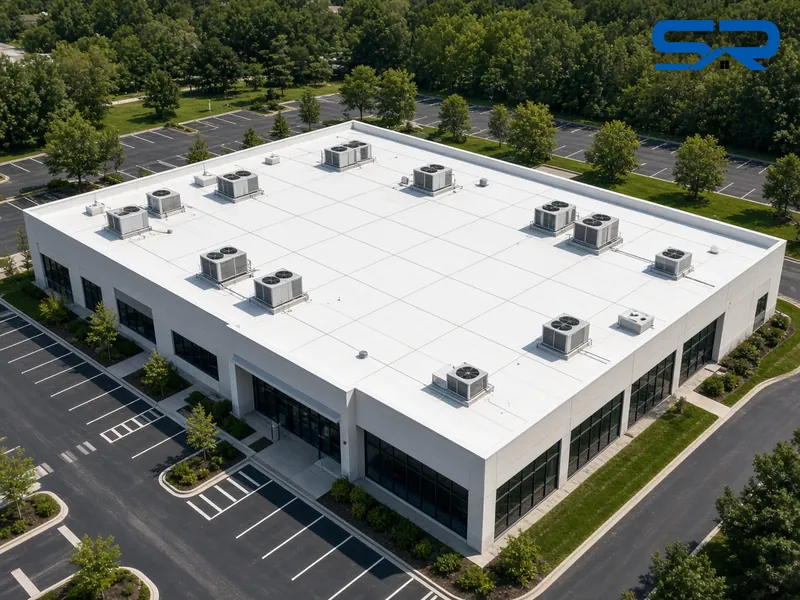
- Roofs crowded with rooftop units, curbs and penetrations that would break up panel runs
- Roofs where a TPO, PVC or coating gets you the life you need for less
We price both on one sheet with our multi-option bids so you can compare the honest numbers.
Steep-slope metal on commercial buildings
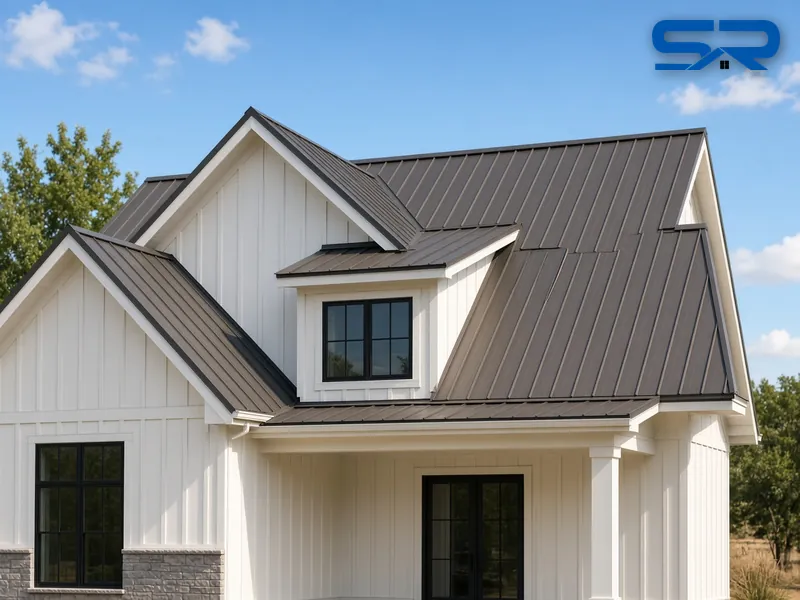
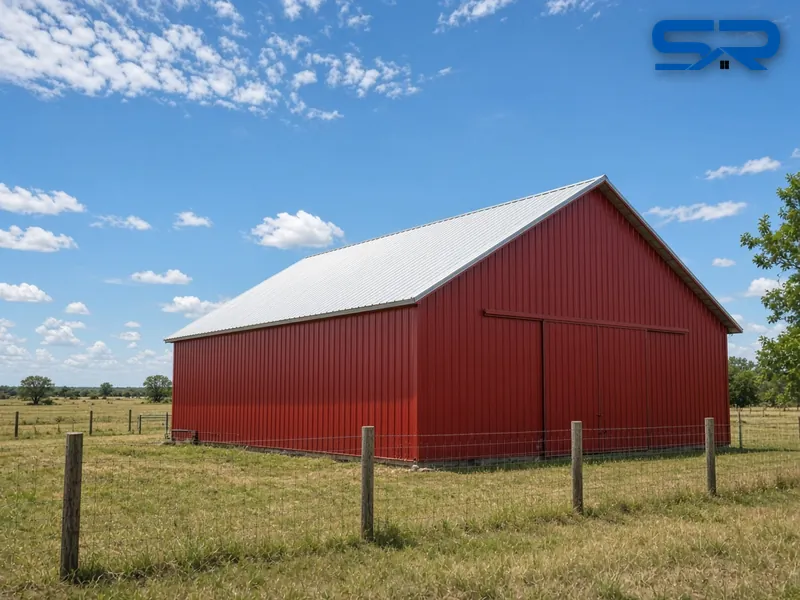
Churches, mansards, gas station canopies and offices with pitched roofs all take steep-slope metal well. See church roofing, gas station canopies, dealerships and ag and equestrian buildings. For hail, read Class 4 hail ratings for commercial metal roofs.
Who we are
Owner Blake Snow has almost 40 years in the business, and the Snow family has been roofing in this market for 75 years. Snow Roofing started as a tier-one commercial company doing only large-scale work, including casino properties on the Mississippi Gulf Coast such as the Imperial Palace in 2006, right after Hurricane Katrina, before it expanded into residential. We've also done full exterior and interior rehabs on national-brand hotel properties around the DFW Metroplex. No job is too big or too small, Snow Roofing does them all. We're certified with GAF, CertainTeed, Owens Corning, Atlas, Johns Manville, Carlisle, Tropical Roofing Products, Mule-Hide and Enviroshake, and many other roof manufacturers. Manufacturer NDL (no-dollar-limit) warranties typically run from 10 to 40 years, depending on the manufacturer, the system, and manufacturer approval of the finished job. We do not promise a specific NDL term until that approval is in place. We offer same-day response in almost every case, and we answer leak and storm calls 24/7 at (817) 733-9228.
Up to: commercial metal roofing · commercial roofing. Related: metal building re-roofs · standing seam · R-panel and PBR.
Code sections and standards are summarized in plain English from the published documents. Your building official, the manufacturer's current specification and the warranty document have the final word.
Commercial warranty: a workmanship warranty from 10 years up to lifetime, depending on the job, plus manufacturer NDL (no-dollar-limit) warranties that typically run from 10 to 40 years, depending on the manufacturer, the system, and manufacturer approval of the finished job (we do not promise a specific NDL term until that approval is in place). Manufacturer coverage depends on the product and brand, and on the project qualifying for that manufacturer's program. We put the exact warranty for your roof in writing.
Certified, with almost 40 years in the business for owner Blake Snow, installing every major roofing brand, a family roofing legacy going back 75 years, and over $80 million in completed roofing projects. 5.0 stars on Google at all three of our offices.
Request a free inspection or call (817) 733-9228. Small repairs are welcome too.