
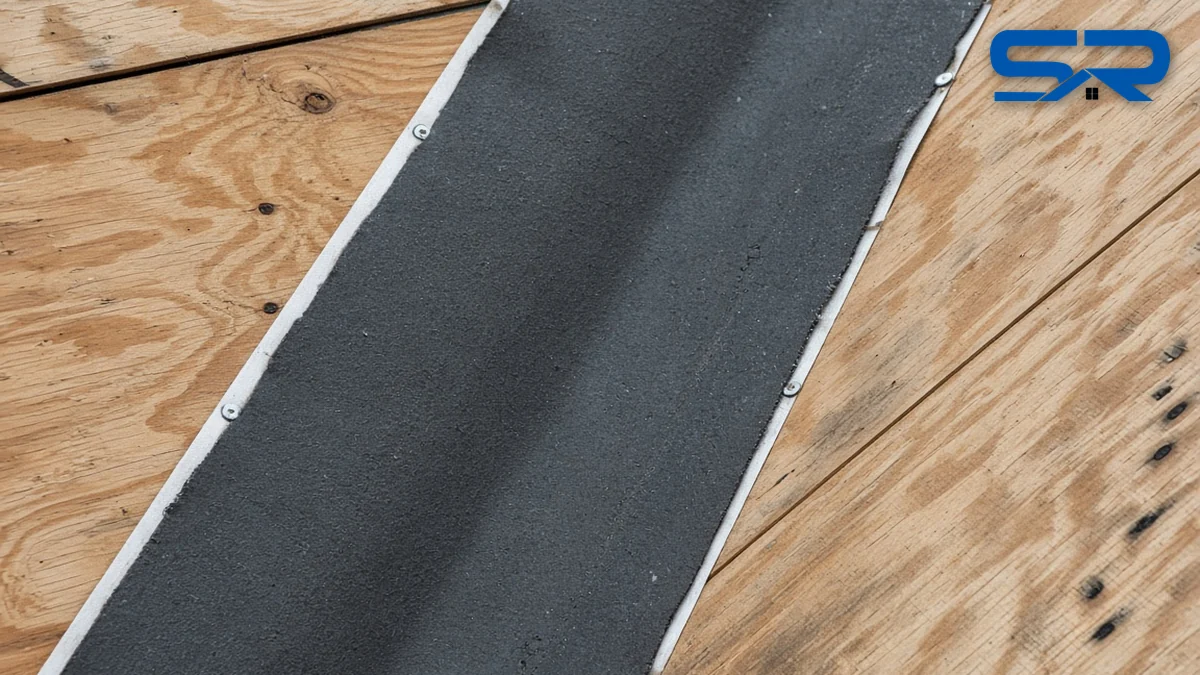



GAF WeatherWatch vs. StormGuard vs. CertainTeed WinterGuard vs. Owens Corning WeatherLock sounds like a contractor-only question. It isn’t. On Keller and Trophy Club shingle roofs, most leaks I chase start in the same places: valleys, roof-to-wall lines, chimneys and low-slope sections. The self-adhered leak barrier under the shingles in those spots is what keeps a small flashing problem from turning into a stained ceiling.
I’m Blake Snow. I’ve been roofing for 30 years, and Snow Roofing & Exteriors is certified with GAF, CertainTeed and Owens Corning. Here’s how each maker’s leak barriers compare, from their own product pages and ICC-ES evaluation reports, and where I put them on a North Texas shingle roof.
The short answer
- They all do the same basic job: a self-adhering, modified-asphalt membrane that seals around nails and sits under the shingles where water concentrates.
- The surface is the main difference. Granular or sand (GAF WeatherWatch, CertainTeed WinterGuard Granular and Sand, Owens Corning WeatherLock G) vs. film or polymer-coated (GAF StormGuard, CertainTeed WinterGuard HT X, Owens Corning WeatherLock Flex and Mat).
- Film-surfaced, high-temp versions (StormGuard, WinterGuard HT X) are the ones the makers list for metal too. For standing seam, see my high-temp underlayment post.
- Match the brand to the shingle if you want the maker’s system warranty. Each one builds its leak barrier into its own roofing system.
- Leak barrier is backup, not flashing. It still needs proper step, counter and kick-out flashing over it.
Side by side
| GAF WeatherWatch | GAF StormGuard | CertainTeed WinterGuard | Owens Corning WeatherLock | |
|---|---|---|---|---|
| Surface | Mineral (granular) | Blue patterned film with surface channels | Granular, Sand, Sand X; HT X is film-surfaced | G: granulated; Flex: poly surface; Mat: polymeric coating with SureStep traction |
| Thickness (nominal) | 73 mil (ICC-ES ESR-1322) | 55 mil (ESR-1322) | Granular: 70 mil (ICC-ES ESR-1492) | Not listed on current OC pages |
| Build | Fiberglass mat, SBS-modified bitumen | Fiberglass mat, SBS-modified bitumen, 250°F compound | Fiberglass, modified bitumen (polymer-modified asphalt) | Modified asphalt; Mat has a Fiberglas mat reinforcement |
| Listed roof types | Asphalt shingle | Asphalt shingle and most metal roofing | Granular/Sand: shingle, slate, tile. HT X: shingle, metal, slate, tile | G, Flex and Mat: asphalt shingle, wood shake, quarry slate. Specialty Tile & Metal version for those roofs |
| Roll sizes | 1.5 and 2.0 square | 2.0 square | Varies by product and region | Mat: 200 sq ft; Flex: 225 sq ft (3’ x 75’) |
| Notable maker notes | Split-back release film; self-seals around nails | Cooler blue surface; dual selvage for two-way roll-out | Warranted watertight for the shingle warranty period, up to 50 years | Flex: UV exposure up to 30 days, installs down to 40°F. G: full deck recommended on 2:12–4:12 |
| System | GAF Lifetime Roofing System | GAF Lifetime Roofing System; up to 10-yr warranty under approved non-asphaltic roofs | CertainTeed Integrity Roof System | Owens Corning Total Protection Roofing System |
Sources: GAF WeatherWatch and StormGuard product pages and ICC-ES ESR-1322 (reissued January 2026); CertainTeed WinterGuard Sand and Granular and WinterGuard HT X pages and ICC-ES ESR-1492; Owens Corning WeatherLock G, WeatherLock Flex and WeatherLock Mat pages and the WeatherLock Flex data sheet. Availability varies by region.
Granular vs. film vs. mat: does the surface matter?
For a shingle roof, all three work. The differences show up on the job:
- Granular and sand surfaces (WeatherWatch, WinterGuard Granular and Sand, WeatherLock G) are the traditional choice under asphalt shingles and give good footing.
- Film surfaces (StormGuard, WinterGuard HT X) are thinner, smoother and made with high-temperature compounds, which is why the makers also list them for metal. GAF says the blue StormGuard surface is cooler to work on than typical black underlayments.
- Polymer-coated mats and flexible poly (WeatherLock Mat and Flex) are lighter to carry. Owens Corning says Flex conforms around corners and penetrations and installs down to 40°F.
What matters more than the surface: it goes on a clean, dry deck, laps the right way, and runs where water actually concentrates.
Where code and the shingle makers call for it
Ice barrier at the eaves. The residential code requires an ice barrier only in areas with a history of ice forming at the eaves, and the local jurisdiction decides that when it adopts the code. We check Keller’s and Trophy Club’s adopted codes on every job. Even where it isn’t required, GAF says that in warmer Southern regions these products help protect against leaks from wind-driven rain, and that’s the reason I still use it at eaves on most North Texas roofs.
Valleys. The building code allows a self-adhering membrane labeled to ASTM D1970 as the lining for closed valleys (valleys covered with shingles). Owens Corning’s Duration FLEX instructions call for a 36-inch-wide self-adhered valley liner (or 50 lb. smooth roll roofing) under a closed-cut valley. I put leak barrier in every valley, every time.
Low slopes. Owens Corning allows its self-adhered ice and water barrier as the underlayment on 2:12 to less-than-4:12 shingle roofs, and recommends WeatherLock G over the entire deck on 2:12 to 4:12 pitches, with proper ventilation. Shallow porch tie-ins and additions are where that matters most.
Walls, chimneys, skylights. GAF and Owens Corning both list chimneys and skylights among the spots for leak barrier, and I add every roof-to-wall line. That’s where it overlaps with flashing.
How leak barrier ties into flashing
My rule on our crews: the membrane is the backup, the metal is the roof. A roof-to-wall line gets leak barrier turned up the wall, then step flashing at each shingle course, then counter flashing or the siding and house wrap lapped over it. Where a roof edge dies into a wall, a kick-out flashing sends water into the gutter instead of behind the siding. Chimney flashing gets the same layered approach, with a cricket on wide chimneys.
When people call about “a roof leak” at a wall, it’s usually missing kick-out flashing or step flashing that was face-nailed or skipped, not the shingles. Read why most roof leaks start at the flashing and our roof flashing page for the details.
Install details that make or break it
- Clean, dry deck. ESR-1322 limits WeatherWatch and StormGuard to plywood decks and application between 45°F and 120°F. ESR-1492 says WinterGuard goes on solidly sheathed plywood or OSB above 40°F. CertainTeed says WinterGuard HT X goes on a bare deck, never over shingles.
- Laps. ESR-1322 calls for 3-inch side laps and 6-inch end laps on WeatherWatch and StormGuard, shingled uphill.
- Cover it on time. The makers set UV exposure limits; Owens Corning lists up to 30 days for WeatherLock Flex. We don’t leave it baking for weeks.
- Ventilation. Full-deck membranes on a low slope need a properly vented attic; Owens Corning says so directly for WeatherLock G.
- No membrane over old shingles. Leak barrier goes on the deck after tear-off.
The warranty angle
Each maker builds its leak barrier into its system warranties. GAF says WeatherWatch and StormGuard are eligible for a lifetime limited warranty with GAF Lifetime shingles and at least two other qualifying GAF accessories, and GAF’s 15-year WindProven wind warranty on Timberline shingles with LayerLock requires GAF starter strips, roof deck protection, ridge cap shingles, and leak barrier or attic ventilation. CertainTeed warrants WinterGuard watertight for the same period as the shingle warranty above it, up to 50 years. Owens Corning lists WeatherLock in its Total Protection Roofing System.
So on a GAF roof I use GAF leak barrier, on CertainTeed I use WinterGuard, and on Owens Corning I use WeatherLock. Manufacturer NDL warranties typically run from 10 to 40 years, depending on the manufacturer, the system and manufacturer approval; we don’t promise a term until the manufacturer approves the job. Our own workmanship warranty runs from 10 years up to lifetime, depending on the job. The matching ridge cap matters too; see my hip and ridge cap comparison.
Which one would I use in Keller or Trophy Club?
- GAF shingle roof: WeatherWatch in valleys and at eaves and walls; StormGuard where there’s a metal accent or a hotter, low-slope section.
- CertainTeed shingle roof: WinterGuard Granular or Sand; WinterGuard HT X under any metal.
- Owens Corning shingle roof: WeatherLock G or Mat; Flex around chimneys and tricky corners; full-deck WeatherLock G on 2:12 to 4:12 sections.
- Shingle roof with standing seam porches: the film-surfaced, high-temp version under the metal. We run our own roll formers for standing seam, so this comes up a lot.
What goes on our re-roof proposals
- Leak barrier by brand and product name, and exactly where it goes (valleys, eaves, walls, chimneys, low slopes)
- Field underlayment, starter, ridge cap and ventilation by product name
- Every flashing replaced: step, counter, chimney, kick-out, pipe boots
- Which manufacturer warranty the system qualifies for
After a storm
Wind-driven rain finds valleys and walls first. If a ceiling stain shows up after a storm, get it looked at before anyone patches it, and document it. Texas insurance timing: generally 1 year from date of loss, check your policy. Recent local hail is in my August 26, 2026 Keller, Haslet and Alliance hail post, and you can look up past storms in NOAA’s Storm Events Database. Every inspection we do comes with a free digital photo report.
Talk to us about a re-roof in Keller or Trophy Club
We replace roofs across Keller, Trophy Club, Southlake, Westlake, Roanoke and Colleyville. We’re certified with GAF, CertainTeed, Owens Corning, Atlas, Johns Manville, Carlisle, Tropical Roofing Products, Mule-Hide and Enviroshake, and many other roof manufacturers. We’re fully insured, BBB A+ rated, and have 5.0 stars on Google at all three offices: Bridgeport, Decatur and Rhome.
See our shingle roofing, Class 4 shingles in Keller, Keller and Trophy Club pages, use the estimate form below, or call (817) 733-9228.
Sources
- GAF: WeatherWatch Mineral-Surfaced Leak Barrier
- GAF: StormGuard Film-Surfaced Leak Barrier
- ICC-ES ESR-1322: GAF WeatherWatch and StormGuard (reissued January 2026)
- GAF: WindProven Limited Wind Warranty
- CertainTeed: WinterGuard Sand and Granular
- CertainTeed: WinterGuard HT X
- ICC-ES ESR-1492: CertainTeed WinterGuard series
- Owens Corning: WeatherLock G, WeatherLock Flex and WeatherLock Mat
- Owens Corning: WeatherLock Flex data sheet
- Owens Corning: Duration FLEX installation instructions
- International Building Code 1507.2.8.2: Valleys (via UpCodes)
- NOAA NCEI Storm Events Database