
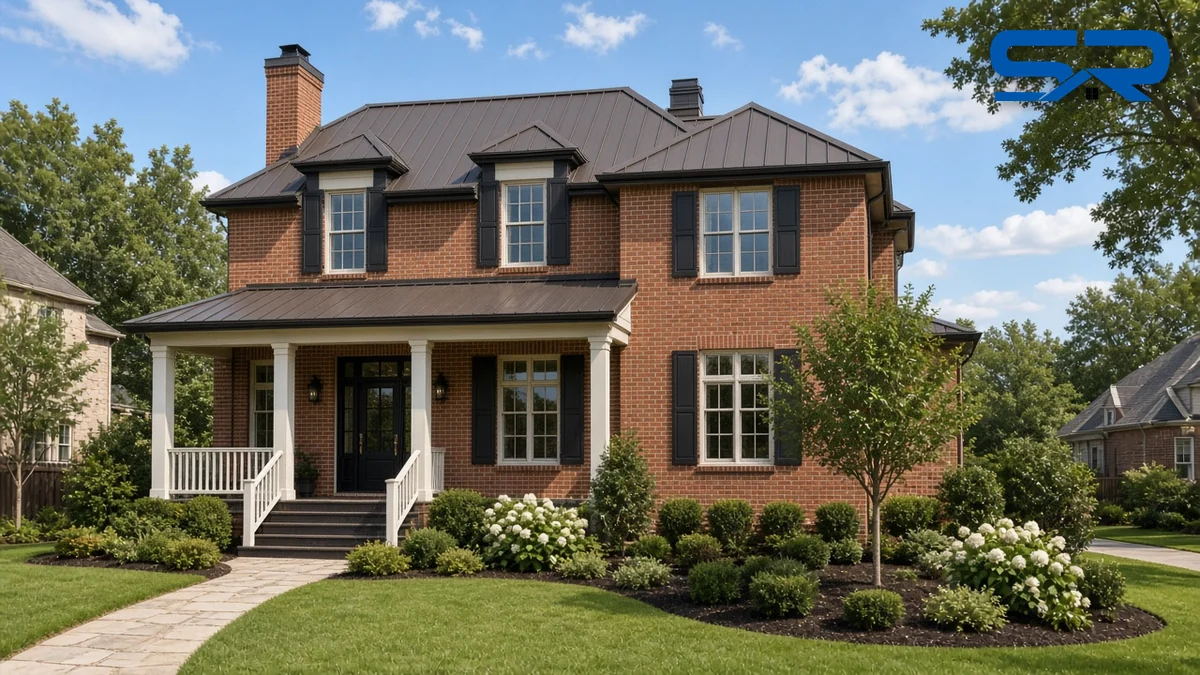
HOA approval for a specialty roof in Frisco and Prosper takes more than a shingle color chip. When you want standing seam metal, clay or concrete tile, synthetic slate or Enviroshake on a house in a deed-restricted neighborhood, the architectural committee is weighing something it may not have approved on your street before. The homeowner who gets a yes is usually the one with the clearest packet.
I’m Blake Snow. I’ve been roofing for 30 years, I’m the third generation in a family business that goes back 75 years, and our crews have completed over $80 million in roofing projects. We run our own roll formers for standing seam, and we install tile, synthetic slate and Enviroshake across Frisco, Prosper and the rest of North Texas. Here’s how I put together a color and material packet for a specialty roof in these two cities.
The short version
- Texas law helps shingles most. Property Code 202.011 limits how an HOA can restrict wind- and hail-resistant shingles that resemble the neighborhood’s roofs. Standing seam and tile aren’t named, so they live or die in design review.
- Prosper has its own roof rules under the HOA’s. Metal, tile and slate roofs need at least 75 percent of the roof at 3:12 or steeper, wood roof shingles are prohibited, and some planned developments require non-reflective metal colors.
- Committees approve what they can picture. Exact product, exact color, a real sample against your brick, and a roof plan beat a brochure every time.
- Plan the whole house. Trim, gutters, vents, skylights and porch accents all belong in the packet.
- Know your appeal rights. In associations over 40 lots that are past developer control, Section 209.00505 gives you a written reason for a denial and a hearing before the board.
- HOA first, permit second. Neither Frisco nor Prosper enforces your HOA’s covenants for you.
What Texas law does and doesn’t do for a specialty roof
Most roofing articles quote Texas Property Code 202.011 and stop there. Here’s what the statute actually says, and what it means for a roof that isn’t asphalt shingles.
Under Section 202.011, an association can’t prohibit or restrict an owner who’s otherwise allowed to install shingles from installing shingles that are designed primarily to be wind and hail resistant, to provide better heating and cooling efficiency than customary composite shingles, or to provide solar generation, as long as, once installed, they:
- resemble the shingles used or otherwise authorized in the subdivision,
- are more durable than, and of equal or superior quality to, those shingles, and
- match the aesthetics of the surrounding property.
| Roof you want | How 202.011 lines up | What usually decides it |
|---|---|---|
| Class 4 designer shingles | Closest fit, when they resemble the approved shingles | The resemble, quality and aesthetics tests |
| Stone-coated steel shingle, shake or tile | Can resemble shingles or tile from the street | Committee review of profile and color |
| Standing seam metal | Not named in the statute | Design review, the packet and your deed restrictions |
| Clay or concrete tile | Not named in the statute | Design review, plus the house’s framing |
| Synthetic slate or Enviroshake | Whether a composite counts as a “shingle” is a legal question for your attorney | Design review and a strong sample |
So for a standing seam, tile, synthetic or Enviroshake roof, plan on persuading the committee rather than relying on the statute. If you just want an impact-rated shingle, our HOA compliant roof replacement guide and Class 4 shingles in Frisco page cover that path.
Prosper’s roof rules sit under your HOA’s
Prosper is unusual because its zoning code speaks directly to specialty roofs. For main buildings and garages in the A, SF-E, SF-15, SF-10 and TH districts, Prosper’s zoning code says:
| Roof type | Prosper pitch standard |
|---|---|
| Composition (shingles) | At least 65% of the roof surface at 8:12 or steeper |
| Clay tile, cement tile, slate or slate products, metal | At least 75% of the roof surface at 3:12 or steeper |
| Wood roof shingles | Prohibited |
Many Prosper neighborhoods are planned developments with their own standards. Ordinance 2024-77, for example, lists composition, slate, clay tile, standing seam metal and cement or concrete tile as the allowed roofs, prohibits wood shingles, requires all roofs to be guttered, and says metal roofs “shall be non-reflective colors.”
What that means for your packet:
- Standing seam: choose a low-gloss, non-reflective color, and say so in the packet. Dark bronze, charcoal and matte black are common choices on brick and stone.
- Tile or slate: check the pitch of every roof section. Low porches and patio roofs are where a tile plan usually needs a second material.
- Cedar look: wood shakes are out, so a composite shake like Enviroshake is the usual route. Ask how your planned development and HOA classify a composite before you order. I check that with the Town and the HOA first.
In Frisco, your HOA’s written guidelines are usually the main document to read, along with any planned development standards for your neighborhood.
Start with your own neighborhood’s documents
Before you pick a color, get these from your HOA or management company:
- The declaration (CC&Rs) and any supplemental declarations for your section.
- The architectural or design guidelines, including any approved roof list or color palette.
- The current request form and submission checklist.
- The review calendar: how often the committee meets, how long it takes, and whether there’s a fee or expedite option.
Timelines vary. One Prosper association’s architectural page, for example, says even roof repairs and replacements need written approval first, that requests are worked in the order received, and that they can take 30 to 60 days under its governing documents. An unapproved change there can lead to a violation, a fine or removal.
The color and material packet I put together
Here’s what goes in a packet for each specialty roof. Your HOA’s checklist comes first; this fills the gaps.
Every packet
- Your signed request form.
- A roof plan or aerial with each area marked by material: main roof, porch, bays, patio cover, pool house.
- Photos of all four sides of your house, plus the roofs next door and across the street.
- The exact manufacturer, product, profile and color name, with the product data sheet.
- A physical sample, plus daylight photos of that sample held against your brick or stone.
- Trim, gutter and downspout colors, and how vents, pipe boots and skylights will be finished to blend.
- Contractor information: certificate of insurance and how to reach us.
Standing seam metal
Committees want to see how the panels will look up close, not just the color.
| Item | What to show |
|---|---|
| Panel | Profile, panel width and seam height, from the panel we’ll roll-form on site |
| Gauge | 24 or 26 gauge |
| Finish | The paint system and color, with a low-gloss or non-reflective note where required. See PVDF vs. SMP paint |
| Details | Ridge, hip, eave and rake trim colors, and how snow guards or solar would attach, if any |
| Photos | A finished standing seam roof on a similar brick or stone house |
Color does most of the work on a brick home. Our guide to standing seam colors on brick and limestone walks through the combinations. If the committee is hesitant about a full metal roof, a standing seam porch, bay or entry with a matching main roof can be an easier first ask. See standing seam in Frisco and our standing seam cost guide.
Clay or concrete tile
- Manufacturer, profile (barrel, S-tile, flat) and blend name, with a few loose tiles so the committee sees the color range.
- Hip, ridge and rake trim pieces, and how eave closures will look.
- Notes on the roof sections too low in pitch for tile, and what goes there instead.
- A note that framing will be checked. Tile is much heavier than shingles, so if you’re switching from shingles, the structure may need an engineer’s review before the permit.
See tile roofing in Frisco, clay tile, concrete tile, and brands such as Westlake Royal and Ludowici.
Synthetic slate or Enviroshake
- The product line and color blend, with a full-size sample.
- The manufacturer’s published impact, fire and wind ratings. Enviroshake, for example, publishes a UL 2218 Class 4 impact rating and Class A fire-rated assemblies.
- Photos of a finished roof in the same blend, so reviewers see real shadow lines.
- For Enviroshake, the manufacturer requires a factory-trained installer for the warranty to be valid. Snow Roofing & Exteriors is certified with Enviroshake.
Compare synthetic slate options in Brava vs. DaVinci synthetic slate in Frisco, or see Enviroshake in Frisco.
Put the sample on your house
A color chip on a conference table tells the committee very little. North Texas sun changes how a bronze panel, a red clay blend or a gray composite slate reads against brick. I bring samples to the house and we look at them against your walls in the morning and the afternoon. Then the packet shows the committee the same thing you saw: the sample, your brick, your trim, in daylight.
Don’t assume a color approved three doors down is approved for your lot. Ask, and put the answer in writing.
If the committee says no
Under Texas Property Code Section 209.00505, in an association with more than 40 lots:
- A denial must be in writing, describe the basis in reasonable detail, and list any changes needed for approval.
- You can request a hearing before the board on or before the 30th day after the notice was mailed.
- The board must hold the hearing within 30 days of receiving your request and give you at least 10 days’ notice.
- The board can affirm, modify or reverse the committee’s decision.
That section doesn’t apply during a development period, or while the developer appoints a majority of the committee or can veto its decisions. Many newer Frisco and Prosper neighborhoods are still in that stage, so find out who actually controls architectural review in yours.
Most denials I see aren’t a no to the material. They’re a no to a color, a missing sample, or a roof plan that didn’t show the porch. Read the denial, fix exactly what it asks for, and resubmit.
HOA approval and the city permit are two tracks
Get the written HOA approval for the exact product and color first, then pull the permit for that approved scope.
- Frisco: the city offers self-service residential permits for roofs replaced with the same material, per its residential permits page. A change to standing seam or tile isn’t a same-material replacement, so we confirm the permit path with Frisco Building Inspections. Contractors must be registered with the city before most permits can be submitted.
- Prosper: re-roofs are submitted online as a residential building remodel with a site plan, survey or aerial of the roofline, per the Town’s re-roof submittal sheet. Damaged or rusted vents and flashing must be replaced, and the final inspection includes the attic. The Town’s Building Inspections FAQ lists ten business days for residential permit review, says contractors must be registered with the Town, and says HOA covenants should be verified before you apply because the Town doesn’t enforce them.
We pull the permit and schedule the inspections.
Hail is part of the case
A specialty roof is a long-term choice, and hail is part of the reason owners here make it. NOAA’s Storm Events Database lists 69 reports of hail 1.75 inches or larger within about 10 miles of Frisco, and 51 within about 10 miles of Prosper, from 2016 through September 2026. The largest was 4.5-inch hail near Allen on March 24, 2019. Impact ratings belong in the packet, and they matter to your insurer too. If a storm is what started your project and you’re filing a claim, Texas generally gives you 1 year from the date of loss; check your policy. Our storm damage page explains inspections.
HOA specialty roof checklist
Before you submit, make sure you can answer yes to each of these:
- Have I read my declaration, design guidelines and current request form?
- In Prosper, do all my roof sections meet the pitch standard for the material I want?
- Is the color low-gloss or non-reflective where my rules require it?
- Do I have the exact manufacturer, product, profile and color name?
- Have I seen a real sample against my house in daylight?
- Does my roof plan show every area, including porch, bays and outbuildings?
- Are trim, gutter, vent and skylight colors listed?
- Are the impact, fire and wind ratings in the packet?
- If I’m switching to tile, has the framing been checked?
- Do I know who controls architectural review in my neighborhood, and the review calendar?
- Will I have the HOA’s approval in writing before the permit is pulled?
- Is my contractor registered with the city or town, and insured?
Areas we serve
We install standing seam, tile, synthetic slate and Enviroshake in Frisco, Prosper, Celina, McKinney and across North Texas. See our HOA roofing page, metal roofing in Frisco and slate roofing in Frisco. For other towns’ HOA questions, read standing seam and HOA review in Southlake and HOA approval for Enviroshake in Westlake and Trophy Club.
Let’s build your packet
We’re certified with GAF, CertainTeed, Owens Corning, Atlas, Johns Manville, Carlisle, Tropical Roofing Products, Mule-Hide and Enviroshake, and many other roof manufacturers. Snow Roofing & Exteriors is fully insured, has offices in Bridgeport, Decatur and Rhome, is BBB A+ rated, and has 5.0 stars on Google at all three offices: Bridgeport, Decatur and Rhome. References are available on request. Our workmanship warranty runs from 10 years up to lifetime, depending on the job. Metal lead times are typically 1 to 2 weeks once your color is approved.
Call (817) 733-9228 or request an estimate. I’ll measure the roof, bring samples to your house, and help you put together the color and material packet your committee needs.